
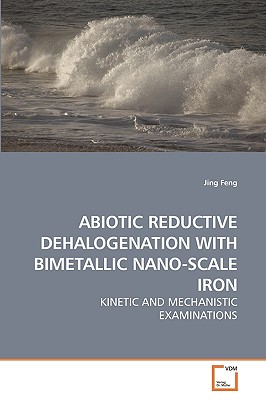
Abiotic Reductive Dehalogenation with Bimetallic Nano-Scale Iron
| AUTHOR | Feng, Jing |
| PUBLISHER | VDM Verlag (10/01/2009) |
| PRODUCT TYPE | Paperback (Paperback) |
Description
Nano-scale Fe, Ni/Fe and Pd/Fe particles were synthesized by wet chemical reduction method. Batch reduction experiments were carried out to investigate the dehalogenation of halogenated methanes with different types of nano-scale particles. The reduction kinetics, pathways and the mechanisms of dehalogenation reactions with the bimetallic particles were also examined. Both kinetic and mechanistic examinations were considered in establishing the major and minor transformation pathways. The reduction of halogenated methanes to end products could follow both parallel and sequential pathways. The main non-halogenated end product was found to be methane. Based on the statistic analysis, two-parameter regression relationships were also established for kinetics prediction of the dehalogenation reactions with the nano-scale particles. Meanwhile, the presence of amphiphiles (such as natural organic matters and surfactants) and an increase of pH value would inhibit the reduction rate of halogenated methanes.
Show More
Product Format
Product Details
ISBN-13:
9783639200881
ISBN-10:
3639200888
Binding:
Paperback or Softback (Trade Paperback (Us))
Content Language:
English
More Product Details
Page Count:
204
Carton Quantity:
40
Product Dimensions:
6.00 x 0.47 x 9.00 inches
Weight:
0.67 pound(s)
Country of Origin:
US
Subject Information
BISAC Categories
Technology & Engineering | Environmental - General
Descriptions, Reviews, Etc.
publisher marketing
Nano-scale Fe, Ni/Fe and Pd/Fe particles were synthesized by wet chemical reduction method. Batch reduction experiments were carried out to investigate the dehalogenation of halogenated methanes with different types of nano-scale particles. The reduction kinetics, pathways and the mechanisms of dehalogenation reactions with the bimetallic particles were also examined. Both kinetic and mechanistic examinations were considered in establishing the major and minor transformation pathways. The reduction of halogenated methanes to end products could follow both parallel and sequential pathways. The main non-halogenated end product was found to be methane. Based on the statistic analysis, two-parameter regression relationships were also established for kinetics prediction of the dehalogenation reactions with the nano-scale particles. Meanwhile, the presence of amphiphiles (such as natural organic matters and surfactants) and an increase of pH value would inhibit the reduction rate of halogenated methanes.
Show More
Your Price
$101.32