
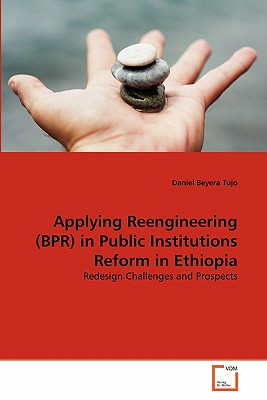
Applying Reengineering (BPR) in Public Institutions Reform in Ethiopia
| AUTHOR | Tujo, Daniel Beyera |
| PUBLISHER | VDM Verlag (03/28/2011) |
| PRODUCT TYPE | Paperback (Paperback) |
Description
Three years after 'Comprehensive Public Sector Reform in Ethiopia' the government is claiming the necessity of radical reform in 2005. There are growing quest for more responsive, reliable and adaptive public services in all institutions. The actual outcomes of the previous reform found no longer adequate to offer better public services. This book, therefore, examine how reform through reengineering (BPR) can bring about the intended radical reform. Applying BPR involves full of competing and tempting choices: it is costly process with less historical 'success' rate; and its use greatly challenges the status quo, the existing beliefs and culture, performance practices and overall system that result in public sector resistance. On the other hand 'success' requires integration of actors involved, synchronizing the blend between process redesign, use of technology and winning peoples' attitudes.
Show More
Product Format
Product Details
ISBN-13:
9783639340839
ISBN-10:
3639340833
Binding:
Paperback or Softback (Trade Paperback (Us))
Content Language:
English
More Product Details
Page Count:
136
Carton Quantity:
58
Product Dimensions:
6.00 x 0.32 x 9.00 inches
Weight:
0.46 pound(s)
Country of Origin:
US
Subject Information
BISAC Categories
Political Science | General
Descriptions, Reviews, Etc.
publisher marketing
Three years after 'Comprehensive Public Sector Reform in Ethiopia' the government is claiming the necessity of radical reform in 2005. There are growing quest for more responsive, reliable and adaptive public services in all institutions. The actual outcomes of the previous reform found no longer adequate to offer better public services. This book, therefore, examine how reform through reengineering (BPR) can bring about the intended radical reform. Applying BPR involves full of competing and tempting choices: it is costly process with less historical 'success' rate; and its use greatly challenges the status quo, the existing beliefs and culture, performance practices and overall system that result in public sector resistance. On the other hand 'success' requires integration of actors involved, synchronizing the blend between process redesign, use of technology and winning peoples' attitudes.
Show More
Your Price
$75.67