
Back to Search

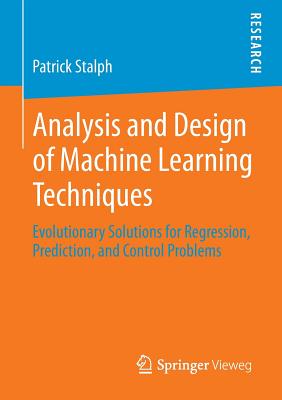
Analysis and Design of Machine Learning Techniques: Evolutionary Solutions for Regression, Prediction, and Control Problems

AUTHOR Stalph, Patrick
PUBLISHER Springer Vieweg (02/17/2014)
PRODUCT TYPE Paperback (Paperback)

Description
Manipulating or grasping objects seems like a trivial task for humans, as these are motor skills of everyday life. Nevertheless, motor skills are not easy to learn for humans and this is also an active research topic in robotics. However, most solutions are optimized for industrial applications and, thus, few are plausible explanations for human learning. The fundamental challenge, that motivates Patrick Stalph, originates from the cognitive science: How do humans learn their motor skills? The author makes a connection between robotics and cognitive sciences by analyzing motor skill learning using implementations that could be found in the human brain - at least to some extent. Therefore three suitable machine learning algorithms are selected - algorithms that are plausible from a cognitive viewpoint and feasible for the roboticist. The power and scalability of those algorithms is evaluated in theoretical simulations and more realistic scenarios with the iCub humanoid robot. Convincing results confirm the applicability of the approach, while the biological plausibility is discussed in retrospect.
Show More
Product Format
Product Details
ISBN-13: 9783658049362
ISBN-10: 3658049367
Binding: Paperback or Softback (Trade Paperback (Us))
Content Language: English
More Product Details
Page Count: 155
Carton Quantity: 40
Product Dimensions: 5.83 x 0.41 x 8.27 inches
Weight: 0.52 pound(s)
Feature Codes: Illustrated
Country of Origin: NL
Subject Information
BISAC Categories
Technology & Engineering | Automation
Technology & Engineering | Computer Science
Technology & Engineering | Electrical
Dewey Decimal: 004
Descriptions, Reviews, Etc.
jacket back

Manipulating or grasping objects seems like a trivial task for humans, as these are motor skills of everyday life. Nevertheless, motor skills are not easy to learn for humans and this is also an active research topic in robotics. However, most solutions are optimized for industrial applications and, thus, few are plausible explanations for human learning. The fundamental challenge, that motivates Patrick Stalph, originates from the cognitive science: How do humans learn their motor skills? The author makes a connection between robotics and cognitive sciences by analyzing motor skill learning using implementations that could be found in the human brain - at least to some extent. Therefore three suitable machine learning algorithms are selected - algorithms that are plausible from a cognitive viewpoint and feasible for the roboticist. The power and scalability of those algorithms is evaluated in theoretical simulations and more realistic scenarios with the iCub humanoid robot. Convincing results confirm the applicability of the approach, while the biological plausibility is discussed in retrospect.

Contents

  • How do humans learn their motor skills
  • Evolutionarymachinelearningalgorithms
  • Applicationtosimulatedrobots

Target Groups

  • Researchers interested in artificial intelligence, cognitive sciences or robotics
  • Roboticists interested in integrating machine learning

About the Author

Patrick Stalph was a Ph.D. student at the chair ofCognitive Modeling, which is led by Prof. Butz at the University of Tübingen.

Show More
publisher marketing
Manipulating or grasping objects seems like a trivial task for humans, as these are motor skills of everyday life. Nevertheless, motor skills are not easy to learn for humans and this is also an active research topic in robotics. However, most solutions are optimized for industrial applications and, thus, few are plausible explanations for human learning. The fundamental challenge, that motivates Patrick Stalph, originates from the cognitive science: How do humans learn their motor skills? The author makes a connection between robotics and cognitive sciences by analyzing motor skill learning using implementations that could be found in the human brain - at least to some extent. Therefore three suitable machine learning algorithms are selected - algorithms that are plausible from a cognitive viewpoint and feasible for the roboticist. The power and scalability of those algorithms is evaluated in theoretical simulations and more realistic scenarios with the iCub humanoid robot. Convincing results confirm the applicability of the approach, while the biological plausibility is discussed in retrospect.
Show More
List Price $54.99
Your Price  $54.44
Paperback