
Back to Search

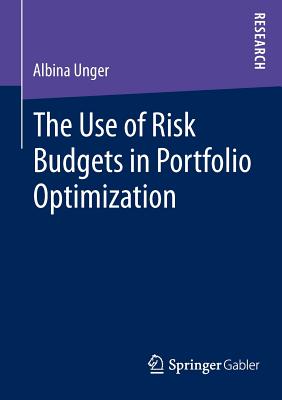
The Use of Risk Budgets in Portfolio Optimization

AUTHOR Unger, Albina
PUBLISHER Springer Gabler (09/22/2014)
PRODUCT TYPE Paperback (Paperback)

Description
Risk budgeting models set risk diversification as objective in portfolio allocation and are mainly promoted from the asset management industry. Albina Unger examines the portfolios based on different risk measures in several aspects from the academic perspective (Utility, Performance, Risk, Different Market Phases, Robustness, and Factor Exposures) to investigate the use of these models for asset allocation. Beside the risk budgeting models, alternatives of risk-based investment styles are also presented and examined. The results show that equalizing the risk across the assets does not prevent losses, especially in crisis periods and the performance can mainly be explained by exposures to known asset pricing factors. Thus, the advantages of these approaches compared to known minimum risk portfolios are doubtful.
Show More
Product Format
Product Details
ISBN-13: 9783658072582
ISBN-10: 365807258X
Binding: Paperback or Softback (Trade Paperback (Us))
Content Language: English
More Product Details
Page Count: 424
Carton Quantity: 16
Product Dimensions: 5.83 x 1.00 x 8.27 inches
Weight: 1.29 pound(s)
Feature Codes: Illustrated
Country of Origin: NL
Subject Information
BISAC Categories
Business & Economics | Finance - General
Business & Economics | Management - General
Business & Economics | Economics - Macroeconomics
Dewey Decimal: 332
Descriptions, Reviews, Etc.
jacket back

Risk budgeting models set risk diversification as objective in portfolio allocation and are mainly promoted from the asset management industry. Albina Unger examines the portfolios based on different risk measures in several aspects from the academic perspective (Utility, Performance, Risk, Different Market Phases, Robustness, and Factor Exposures) to investigate the use of these models for asset allocation. Beside the risk budgeting models, alternatives of risk-based investment styles are also presented and examined. The results show that equalizing the risk across the assets does not prevent losses, especially in crisis periods and the performance can mainly be explained by exposures to known asset pricing factors. Thus, the advantages of these approaches compared to known minimum risk portfolios are doubtful.

Contents

  • Theoretical Background
  • Alternative Approaches in Portfolio Management
  • Minimum Risk Portfolios
  • Risk Budgeting Portfolios
  • Robustness
  • Factor Models

Target Groups

  • Researchers and students in the field of economics with a focus on finance and financial economics
  • Finance/investment professionals

The Author

Albina Unger holds a doctoral degree from the Faculty ofFinance at the University of Bremen, Germany. She now works as a risk manager.

Show More
publisher marketing
Risk budgeting models set risk diversification as objective in portfolio allocation and are mainly promoted from the asset management industry. Albina Unger examines the portfolios based on different risk measures in several aspects from the academic perspective (Utility, Performance, Risk, Different Market Phases, Robustness, and Factor Exposures) to investigate the use of these models for asset allocation. Beside the risk budgeting models, alternatives of risk-based investment styles are also presented and examined. The results show that equalizing the risk across the assets does not prevent losses, especially in crisis periods and the performance can mainly be explained by exposures to known asset pricing factors. Thus, the advantages of these approaches compared to known minimum risk portfolios are doubtful.
Show More
List Price $54.99
Your Price  $54.44
Paperback