
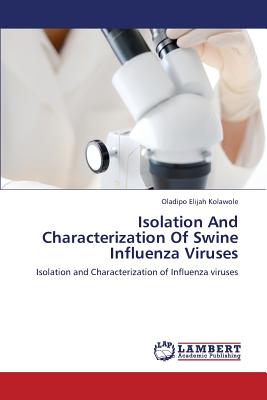
Isolation and Characterization of Swine Influenza Viruses
| AUTHOR | Elijah Kolawole Oladipo |
| PUBLISHER | LAP Lambert Academic Publishing (09/19/2012) |
| PRODUCT TYPE | Paperback (Paperback) |
Description
Both human and avian influenza virus can infect pigs and this make pigs to be intermediate hosts or mixing vessels for the generation of new influenza virus of pandemic potential, through genetic recombination. This study was designed to isolate and identify influenza virus strains from pigs at Bodija abattoir in Ibadan, Oyo State, Nigeria, to provide information on the activity of this virus in Ibadan. A total of 186 nasal swabs samples were collected from 93 animals.Isolation of influenza virus was carried out using conventional cell culture (MDCK) and ten to twelve-day old embryonated hen's eggs. Identification of isolates was carried out by haemagglutination - inhibition (HI) test using selected World Health Organization (WHO) influenza virus reference antisera. Out of 93 animals tested, 16 (17.2%) were positive for influenza virus infection. Identification of the isolates showed that there was co-circulation of different subtypes of influenza virus in pigs in Ibadan. The isolates were cross reactants of the H subtypes and influenza B virus.
Show More
Product Format
Product Details
ISBN-13:
9783659245671
ISBN-10:
3659245674
Binding:
Paperback or Softback (Trade Paperback (Us))
Content Language:
Russian
More Product Details
Page Count:
128
Carton Quantity:
62
Product Dimensions:
6.00 x 0.30 x 9.00 inches
Weight:
0.44 pound(s)
Country of Origin:
US
Subject Information
BISAC Categories
Science | Life Sciences - Microbiology
Descriptions, Reviews, Etc.
publisher marketing
Both human and avian influenza virus can infect pigs and this make pigs to be intermediate hosts or mixing vessels for the generation of new influenza virus of pandemic potential, through genetic recombination. This study was designed to isolate and identify influenza virus strains from pigs at Bodija abattoir in Ibadan, Oyo State, Nigeria, to provide information on the activity of this virus in Ibadan. A total of 186 nasal swabs samples were collected from 93 animals.Isolation of influenza virus was carried out using conventional cell culture (MDCK) and ten to twelve-day old embryonated hen's eggs. Identification of isolates was carried out by haemagglutination - inhibition (HI) test using selected World Health Organization (WHO) influenza virus reference antisera. Out of 93 animals tested, 16 (17.2%) were positive for influenza virus infection. Identification of the isolates showed that there was co-circulation of different subtypes of influenza virus in pigs in Ibadan. The isolates were cross reactants of the H subtypes and influenza B virus.
Show More
Your Price
$75.67