
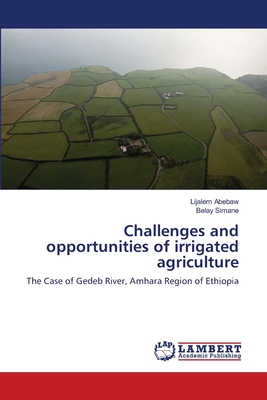
Challenges and opportunities of irrigated agriculture
| AUTHOR | Simane, Belay; Abebaw, Lijalem; Simane Belay et al. |
| PUBLISHER | LAP Lambert Academic Publishing (03/06/2013) |
| PRODUCT TYPE | Paperback (Paperback) |
Description
This study aims at investigating the socioeconomic, institutional and biophysical challenges and opportunities of irrigated crop production in Gedeb River Catchment in Machakel Woreda, East Gojjam Zone, Amhara Region of Ethiopia. The finding of the study revealed that irrigated land holding size of farmers in middle catchment is greater than lower and upper which cause to diversify livelihood strategy of farmers in upper than lower catchment. Crop intensity in upper and middle is 200 percent per year. The extension service provided was inadequate and not packaged. Group collateral and complex bureaucracy of ACSI has constrained to improve crop production. The water governance mainly done by water users but interference by the government bodies aggravated water use conflicts. Streams drying during dry seasons, percolation and seepage of water were determinants of water availability. Irrigation creates employment opportunity and increase income of farmers. Therefore, policy makers and development practitioners should alleviate the constraints, and strength the opportunities.
Show More
Product Format
Product Details
ISBN-13:
9783659356667
ISBN-10:
3659356662
Binding:
Paperback or Softback (Trade Paperback (Us))
Content Language:
English
More Product Details
Page Count:
144
Carton Quantity:
56
Product Dimensions:
6.00 x 0.34 x 9.00 inches
Weight:
0.49 pound(s)
Country of Origin:
US
Subject Information
BISAC Categories
Science | Life Sciences - Horticulture
Descriptions, Reviews, Etc.
publisher marketing
This study aims at investigating the socioeconomic, institutional and biophysical challenges and opportunities of irrigated crop production in Gedeb River Catchment in Machakel Woreda, East Gojjam Zone, Amhara Region of Ethiopia. The finding of the study revealed that irrigated land holding size of farmers in middle catchment is greater than lower and upper which cause to diversify livelihood strategy of farmers in upper than lower catchment. Crop intensity in upper and middle is 200 percent per year. The extension service provided was inadequate and not packaged. Group collateral and complex bureaucracy of ACSI has constrained to improve crop production. The water governance mainly done by water users but interference by the government bodies aggravated water use conflicts. Streams drying during dry seasons, percolation and seepage of water were determinants of water availability. Irrigation creates employment opportunity and increase income of farmers. Therefore, policy makers and development practitioners should alleviate the constraints, and strength the opportunities.
Show More
Your Price
$75.67