
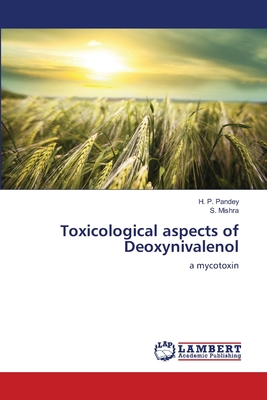
Toxicological aspects of Deoxynivalenol
| AUTHOR | Pandey, H. P.; Mishra, S.; Mishra S. et al. |
| PUBLISHER | LAP Lambert Academic Publishing (11/23/2013) |
| PRODUCT TYPE | Paperback (Paperback) |
Description
The occurrence, frequency, and implications of mycotoxin entering the food chain through cereal grain have gained global attention, especially in the last decade with frequent outbreaks of Fusarium Head blight and Fusarium Ear rot in many cereal-growing regions. Various genera of toxigenic fungi are capable of producing diverse mycotoxins. Deoxynivalenol, (DON) belonging to trichothecene family is a mycotoxin that commonly contaminates cereal-based foods worldwide. DON is biologically active and can disrupt cell signaling, differentiation, growth, and macromolecular synthesis which undoubtedly contribute to its broad spectrum effects in humans as well as animals. Thus considering the toxicity of DON different toxicological aspects have been summarized in the present book regarding its stability, surveillance, with special emphasis towards toxicological studies conducted so far.
Show More
Product Format
Product Details
ISBN-13:
9783659486845
ISBN-10:
3659486841
Binding:
Paperback or Softback (Trade Paperback (Us))
Content Language:
English
More Product Details
Page Count:
68
Carton Quantity:
104
Product Dimensions:
6.00 x 0.16 x 9.00 inches
Weight:
0.25 pound(s)
Country of Origin:
US
Subject Information
BISAC Categories
Science | Life Sciences - Biology
Descriptions, Reviews, Etc.
publisher marketing
The occurrence, frequency, and implications of mycotoxin entering the food chain through cereal grain have gained global attention, especially in the last decade with frequent outbreaks of Fusarium Head blight and Fusarium Ear rot in many cereal-growing regions. Various genera of toxigenic fungi are capable of producing diverse mycotoxins. Deoxynivalenol, (DON) belonging to trichothecene family is a mycotoxin that commonly contaminates cereal-based foods worldwide. DON is biologically active and can disrupt cell signaling, differentiation, growth, and macromolecular synthesis which undoubtedly contribute to its broad spectrum effects in humans as well as animals. Thus considering the toxicity of DON different toxicological aspects have been summarized in the present book regarding its stability, surveillance, with special emphasis towards toxicological studies conducted so far.
Show More
Your Price
$51.17