
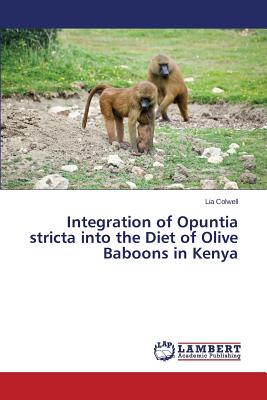
Integration of Opuntia stricta into the Diet of Olive Baboons in Kenya
| AUTHOR | Colwell Lia |
| PUBLISHER | LAP Lambert Academic Publishing (04/22/2015) |
| PRODUCT TYPE | Paperback (Paperback) |
Description
Wild free ranging baboons in Mukugodo Division, Kenya have started in recent years to incorporate Opuntia stricta into their diets. Between August 2011 and February 2012 the contribution of Opuntia on foraging strategies was investigated for one habituated olive baboon troop. A breakdown of monthly feeding patterns was analyzed for variation in overall foraging behaviors and variation between adult male and female baboons. Grass and herb species were eaten the most overall, followed by Opuntia fruits. The rate of Opuntia fruits eaten per minute was significantly inversely correlated with grass and herb species. Males and females both preferred ripe fruits. Males ate more Opuntia fruits than females while females spent more time on herb layer. This study adds to an understanding of the impact of new, energy-rich foods on the dynamics of diet and foraging behavior. It also contributes to how baboons construct foraging strategies as Opuntia continues to alter the landscape.
Show More
Product Format
Product Details
ISBN-13:
9783659548376
ISBN-10:
3659548375
Binding:
Paperback or Softback (Trade Paperback (Us))
Content Language:
English
More Product Details
Page Count:
64
Carton Quantity:
110
Product Dimensions:
6.00 x 0.15 x 9.00 inches
Weight:
0.23 pound(s)
Country of Origin:
US
Subject Information
BISAC Categories
Science | Life Sciences - Zoology - General
Descriptions, Reviews, Etc.
publisher marketing
Wild free ranging baboons in Mukugodo Division, Kenya have started in recent years to incorporate Opuntia stricta into their diets. Between August 2011 and February 2012 the contribution of Opuntia on foraging strategies was investigated for one habituated olive baboon troop. A breakdown of monthly feeding patterns was analyzed for variation in overall foraging behaviors and variation between adult male and female baboons. Grass and herb species were eaten the most overall, followed by Opuntia fruits. The rate of Opuntia fruits eaten per minute was significantly inversely correlated with grass and herb species. Males and females both preferred ripe fruits. Males ate more Opuntia fruits than females while females spent more time on herb layer. This study adds to an understanding of the impact of new, energy-rich foods on the dynamics of diet and foraging behavior. It also contributes to how baboons construct foraging strategies as Opuntia continues to alter the landscape.
Show More
Your Price
$30.65