
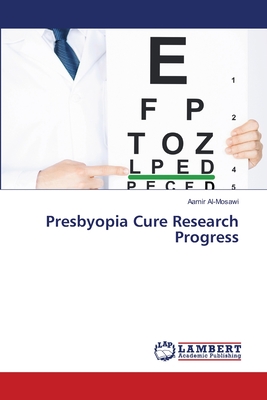
Presbyopia Cure Research Progress
| AUTHOR | Al-Mosawi, Aamir |
| PUBLISHER | LAP Lambert Academic Publishing (11/12/2024) |
| PRODUCT TYPE | Paperback (Paperback) |
Description
Presbyopia, commonly known as "old man's eye disease," is a condition that leads to difficulty seeing near objects due to changes in the eye's lens. Historical explanations date back to Aristotle, with significant contributions from figures like René Descartes and Ernst Brücke, who helped identify the ciliary muscle's role in accommodation. Benjamin Franklin devised the first bifocals in the 1780s as a solution for presbyopia. In the 19th century, advancements included the development of eye charts by Heinrich Kuechler and Eduard Jaeger for assessing near vision. Hermann von Helmholtz later explained that presbyopia results from the loss of lens elasticity due to aging.Presbyopia, an age-related decline in near vision, has driven the search for effective and convenient pharmaceutical therapies. Topical parasympathomimetic agents, particularly pilocarpine, have emerged as promising treatments for this condition. The aim of this book is to provide an understanding and an overview of presbyopia research progress.
Show More
Product Format
Product Details
ISBN-13:
9783659873201
ISBN-10:
3659873209
Binding:
Paperback or Softback (Trade Paperback (Us))
Content Language:
English
More Product Details
Page Count:
56
Carton Quantity:
126
Product Dimensions:
6.00 x 0.13 x 9.00 inches
Weight:
0.21 pound(s)
Country of Origin:
US
Subject Information
BISAC Categories
Medical | General
Descriptions, Reviews, Etc.
publisher marketing
Presbyopia, commonly known as "old man's eye disease," is a condition that leads to difficulty seeing near objects due to changes in the eye's lens. Historical explanations date back to Aristotle, with significant contributions from figures like René Descartes and Ernst Brücke, who helped identify the ciliary muscle's role in accommodation. Benjamin Franklin devised the first bifocals in the 1780s as a solution for presbyopia. In the 19th century, advancements included the development of eye charts by Heinrich Kuechler and Eduard Jaeger for assessing near vision. Hermann von Helmholtz later explained that presbyopia results from the loss of lens elasticity due to aging.Presbyopia, an age-related decline in near vision, has driven the search for effective and convenient pharmaceutical therapies. Topical parasympathomimetic agents, particularly pilocarpine, have emerged as promising treatments for this condition. The aim of this book is to provide an understanding and an overview of presbyopia research progress.
Show More
Your Price
$54.62