
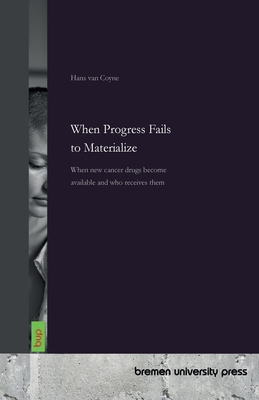
When Progress Fails to Materialize: When new cancer drugs become available and who receives them
| AUTHOR | Van Coyne, Hans |
| PUBLISHER | Bremen University Press (09/18/2025) |
| PRODUCT TYPE | Paperback (Paperback) |
Description
This book combines two crucial perspectives: it shows how the development of modern cancer drugs-from immunotherapies and RNA approaches to genetic methods such as CRISPR-will unfold over the next five, ten, and twenty years. At the same time, it asks who will actually have access to these innovations when they become available. It highlights the scientific paths from discovery to approval, the opportunities and limitations of accelerated procedures, the economic and social hurdles, and the profound ethical questions associated with the distribution of high-priced therapies. An international comparison of healthcare systems shows that progress is not equally distributed - while wealthy countries struggle with prices and budgets, the majority of the world's population remains excluded from state-of-the-art therapies. The book brings both strands together and makes it clear that the future of oncology will be decided not only in the laboratory, but also in insurance companies, political institutions, and the values of modern societies. In many cases, cancer could become a chronically controllable disease in the coming decades - whether this will be a collective advance for all or an exclusive privilege for the few depends on decisions that must be made today. Bremen University Press has published over 5,000 specialist books in various languages since 2005. September 2025
Show More
Product Format
Product Details
ISBN-13:
9783691733884
ISBN-10:
3691733883
Binding:
Paperback or Softback (Trade Paperback (Us))
Content Language:
English
More Product Details
Page Count:
118
Carton Quantity:
60
Product Dimensions:
5.50 x 0.28 x 8.50 inches
Weight:
0.32 pound(s)
Country of Origin:
US
Subject Information
BISAC Categories
Medical | Clinical Medicine
Descriptions, Reviews, Etc.
publisher marketing
This book combines two crucial perspectives: it shows how the development of modern cancer drugs-from immunotherapies and RNA approaches to genetic methods such as CRISPR-will unfold over the next five, ten, and twenty years. At the same time, it asks who will actually have access to these innovations when they become available. It highlights the scientific paths from discovery to approval, the opportunities and limitations of accelerated procedures, the economic and social hurdles, and the profound ethical questions associated with the distribution of high-priced therapies. An international comparison of healthcare systems shows that progress is not equally distributed - while wealthy countries struggle with prices and budgets, the majority of the world's population remains excluded from state-of-the-art therapies. The book brings both strands together and makes it clear that the future of oncology will be decided not only in the laboratory, but also in insurance companies, political institutions, and the values of modern societies. In many cases, cancer could become a chronically controllable disease in the coming decades - whether this will be a collective advance for all or an exclusive privilege for the few depends on decisions that must be made today. Bremen University Press has published over 5,000 specialist books in various languages since 2005. September 2025
Show More
List Price $25.00
Your Price
$24.75