
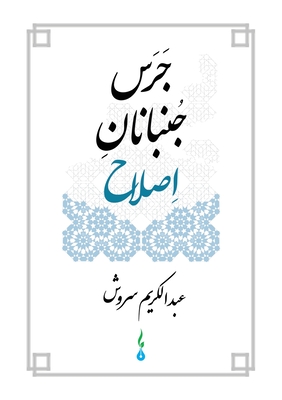
The Bellringers (Poem)
| AUTHOR | Soroush, Abdulkarim |
| PUBLISHER | New Thought Press (10/15/2025) |
| PRODUCT TYPE | Paperback (Paperback) |
This letter tolls like a bell - "lamenting corruption as it comes to pass."
It recounts the tale of the torchbearers of Islamic civilization - those sun-like souls who, through the radiance of their own being, cast light upon the corners of the world and the ummah, driving back the shadows of ignorance. Among them were Avicenna, Khwaja Nasir al-Din Tusi, al-Biruni, Imam al-Ghazali, Ferdowsi, Nasir Khusraw, Sa'di, Rumi, and Hafez - until the invasion of the Turks and Mongols, and the ascendancy of the Ash'arites, the literalists, the ascetics, and the jurists brought an eclipse upon the sun of knowledge. The mighty tree of dignity and power was shattered; the stature of mastery and sovereignty was bent; ethics, philosophy, and thought lost their breath beneath the roof of religion, and the aged patriarch of Islamic civilization was laid to rest in the graveyard of history. Its inhabitants and rulers dispersed - some withdrew to solitude, others wandered to the villages, beggars of spirit and means alike.
The lamp of illumination that the Greek and Western civilization kindled made us more aware of our own darkness and decline. And when we sought to climb out of that pit of decadence, we clung both to the rope of imitation and the rope of ijtihad. The bell-ringers of reform are those very jurists of renewal - uncontent with mere borrowing, they discover within the treasury of the Prophetic law, path, and truth, garments to clothe the nakedness and medicines to heal the ailments of Muslims.
These beloved physicians - caravan leaders, awakeners, pioneers, and circumambulators around the Ka'ba of religious renewal - are few, yet beyond counting. The garden of their thought and action is rich with fragrance and melody, and their blessed heritage abounds in cure and remedy. The names of a few of these noble riders and way-openers, remembered in this collection, mark the pillars upon which the vault of reform rests - though beneath that canopy of culture, hundreds of steadfast names remain seated in quiet strength.
Among them: Sayyid Jamal al-Din al-Afghani, Muhammad Iqbal, Fazlur Rahman, Abu'l-A'la Mawdudi, Nasr Hamid Abu Zayd, Muhammad Abed al-Jabri, Muhammad Arkoun, Mahmoud Muhammad Taha, Muhammad 'Abduh, Ali Abd al-Raziq, Sayyid Qutb, Fayz Kashani, Muhammad Husayn Na'ini, Ali Shariati, Mehdi Bazargan, and Murtaza Motahhari - revivers and reformers of the identity and essence of Islam, whose practical and theoretical breakthroughs are here recalled.
Beyond these figures, the narrative delves into the Constitutional Revolution and the Islamic Revolution, and into the movements of Babism and the Bahá'í Faith - told with both critique and compassion - to present a truthful chronicle of what transpired before and after the "Bahman Revolution" within the seething cauldron and rushing river of modern Iranian history.
Theories such as The Contraction and Expansion of Religious Knowledge, Multiple Straight Paths, The Expansion of Prophetic Experience, and The Prophetic Dream - intellectual offspring of this very pen - appear throughout these pages, scattered without name yet woven into the fabric of the prose.
This letter tolls like a bell - "lamenting corruption as it comes to pass."
It recounts the tale of the torchbearers of Islamic civilization - those sun-like souls who, through the radiance of their own being, cast light upon the corners of the world and the ummah, driving back the shadows of ignorance. Among them were Avicenna, Khwaja Nasir al-Din Tusi, al-Biruni, Imam al-Ghazali, Ferdowsi, Nasir Khusraw, Sa'di, Rumi, and Hafez - until the invasion of the Turks and Mongols, and the ascendancy of the Ash'arites, the literalists, the ascetics, and the jurists brought an eclipse upon the sun of knowledge. The mighty tree of dignity and power was shattered; the stature of mastery and sovereignty was bent; ethics, philosophy, and thought lost their breath beneath the roof of religion, and the aged patriarch of Islamic civilization was laid to rest in the graveyard of history. Its inhabitants and rulers dispersed - some withdrew to solitude, others wandered to the villages, beggars of spirit and means alike.
The lamp of illumination that the Greek and Western civilization kindled made us more aware of our own darkness and decline. And when we sought to climb out of that pit of decadence, we clung both to the rope of imitation and the rope of ijtihad. The bell-ringers of reform are those very jurists of renewal - uncontent with mere borrowing, they discover within the treasury of the Prophetic law, path, and truth, garments to clothe the nakedness and medicines to heal the ailments of Muslims.
These beloved physicians - caravan leaders, awakeners, pioneers, and circumambulators around the Ka'ba of religious renewal - are few, yet beyond counting. The garden of their thought and action is rich with fragrance and melody, and their blessed heritage abounds in cure and remedy. The names of a few of these noble riders and way-openers, remembered in this collection, mark the pillars upon which the vault of reform rests - though beneath that canopy of culture, hundreds of steadfast names remain seated in quiet strength.
Among them: Sayyid Jamal al-Din al-Afghani, Muhammad Iqbal, Fazlur Rahman, Abu'l-A'la Mawdudi, Nasr Hamid Abu Zayd, Muhammad Abed al-Jabri, Muhammad Arkoun, Mahmoud Muhammad Taha, Muhammad 'Abduh, Ali Abd al-Raziq, Sayyid Qutb, Fayz Kashani, Muhammad Husayn Na'ini, Ali Shariati, Mehdi Bazargan, and Murtaza Motahhari - revivers and reformers of the identity and essence of Islam, whose practical and theoretical breakthroughs are here recalled.
Beyond these figures, the narrative delves into the Constitutional Revolution and the Islamic Revolution, and into the movements of Babism and the Bahá'í Faith - told with both critique and compassion - to present a truthful chronicle of what transpired before and after the "Bahman Revolution" within the seething cauldron and rushing river of modern Iranian history.
Theories such as The Contraction and Expansion of Religious Knowledge, Multiple Straight Paths, The Expansion of Prophetic Experience, and The Prophetic Dream - intellectual offspring of this very pen - appear throughout these pages, scattered without name yet woven into the fabric of the prose.