
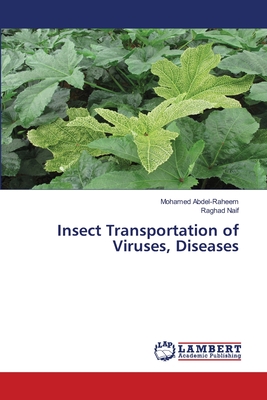
Insect Transportation of Viruses, Diseases
| AUTHOR | Naif, Raghad; Abdel-Raheem, Mohamed |
| PUBLISHER | LAP Lambert Academic Publishing (01/03/2023) |
| PRODUCT TYPE | Paperback (Paperback) |
Description
The majority of plant viruses that cause disease in agricultural crops rely on biotic vectors for transmission and survival. The largest class of plant virus-transmitting vectors is insects but other vectors include mites, nematodes and chytrid fungi. For a comprehensive depiction of plant virus groups and their known associated vectors. The best-characterized plant viral insect vectors are aphids, thrips, leafhoppers, planthoppers and whiteflies. The different modes of viral transmission by vectors include non-persistent, semi-persistent and persistent, whereby the transmission window to disseminate the virus to a new host plant after feeding on an infected plant by the vector lasts from seconds to minutes, hours to days, or days to weeks, respectively. Non-persistent plant viruses are retained in the insect stylet. Semi-persistent viruses are internalized in the insect by binding to chitin lining the gut, but do not appear to enter tissues. Persistent viruses are taken up into and retained by insect tissues and are characterized by invading the salivary glands.
Show More
Product Format
Product Details
ISBN-13:
9786205631041
ISBN-10:
6205631040
Binding:
Paperback or Softback (Trade Paperback (Us))
Content Language:
English
More Product Details
Page Count:
280
Carton Quantity:
26
Product Dimensions:
6.00 x 0.63 x 9.00 inches
Weight:
0.91 pound(s)
Country of Origin:
US
Subject Information
BISAC Categories
Science | Life Sciences - Horticulture
Descriptions, Reviews, Etc.
publisher marketing
The majority of plant viruses that cause disease in agricultural crops rely on biotic vectors for transmission and survival. The largest class of plant virus-transmitting vectors is insects but other vectors include mites, nematodes and chytrid fungi. For a comprehensive depiction of plant virus groups and their known associated vectors. The best-characterized plant viral insect vectors are aphids, thrips, leafhoppers, planthoppers and whiteflies. The different modes of viral transmission by vectors include non-persistent, semi-persistent and persistent, whereby the transmission window to disseminate the virus to a new host plant after feeding on an infected plant by the vector lasts from seconds to minutes, hours to days, or days to weeks, respectively. Non-persistent plant viruses are retained in the insect stylet. Semi-persistent viruses are internalized in the insect by binding to chitin lining the gut, but do not appear to enter tissues. Persistent viruses are taken up into and retained by insect tissues and are characterized by invading the salivary glands.
Show More
Your Price
$118.75