
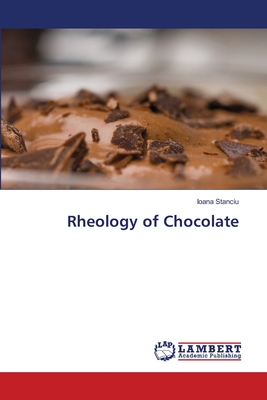
Rheology of Chocolate
| AUTHOR | Stanciu, Ioana |
| PUBLISHER | LAP Lambert Academic Publishing (07/07/2025) |
| PRODUCT TYPE | Paperback (Paperback) |
Description
The book titled Rheology of Chocolate is structured into five chapters. Chocolate is one of the world's most beloved snacks, and its texture-or mouthfeel-is essential to how consumers perceive its quality. The textural aspects of chocolate, which influence its characteristic flavor, can be finely controlled. Mouthfeel is typically evaluated by examining flow behavior-this is where rheology comes in. The most fundamental rheological test performed on chocolate is viscosity measurement. In this process, a small sample is sheared at a fixed shear rate, and the stress required to achieve that rate is measured. Dynamic viscosity is then calculated by dividing shear stress by shear rate. The viscosity-temperature profile of chocolate is crucial for optimizing formulation, tempering, and even for considering the ideal consumption conditions.
Show More
Product Format
Product Details
ISBN-13:
9786206782575
ISBN-10:
6206782573
Binding:
Paperback or Softback (Trade Paperback (Us))
Content Language:
English
More Product Details
Page Count:
120
Carton Quantity:
58
Product Dimensions:
6.00 x 0.28 x 9.00 inches
Weight:
0.38 pound(s)
Country of Origin:
US
Subject Information
BISAC Categories
Science | Chemistry - General
Descriptions, Reviews, Etc.
publisher marketing
The book titled Rheology of Chocolate is structured into five chapters. Chocolate is one of the world's most beloved snacks, and its texture-or mouthfeel-is essential to how consumers perceive its quality. The textural aspects of chocolate, which influence its characteristic flavor, can be finely controlled. Mouthfeel is typically evaluated by examining flow behavior-this is where rheology comes in. The most fundamental rheological test performed on chocolate is viscosity measurement. In this process, a small sample is sheared at a fixed shear rate, and the stress required to achieve that rate is measured. Dynamic viscosity is then calculated by dividing shear stress by shear rate. The viscosity-temperature profile of chocolate is crucial for optimizing formulation, tempering, and even for considering the ideal consumption conditions.
Show More
Your Price
$84.31