
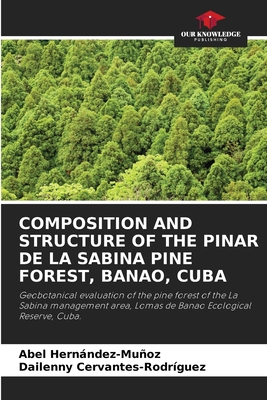
Composition and Structure of the Pinar de la Sabina Pine Forest, Banao, Cuba
| AUTHOR | Cervantes-Rodríguez, Dailenny; Hernndez-Muoz, Abel |
| PUBLISHER | Our Knowledge Publishing (02/05/2024) |
| PRODUCT TYPE | Paperback (Paperback) |
Description
A pine forest plantation of the Pinus caribaea species was studied. The composition and structure of the forest plant formation present in the La Sabina management area, belonging to the Lomas de Banao Ecological Reserve, was determined using the standardized floristic method of sampling by census itinerary with transect bands. The physiognomic analysis of this plant formation was also carried out, using 30 species characteristic of the study area. It was found that in this anthracite plant formation the diversity is high, represented by 87 individuals of 52 species, 41 genera and 28 botanical families. The most diverse families were Bromeliaceae, Polypodiaceae, Mimosaceae, Orchidaceae and Fabaceae. The predominant tree species were Pinus caribaea, Guazuma ulmifolia, Roystonia regia and Bursera simaruba. This forest has high diversity values that demonstrate that it is a mature and structurally complex forest formation, with several vegetation strata.
Show More
Product Format
Product Details
ISBN-13:
9786207057153
ISBN-10:
6207057155
Binding:
Paperback or Softback (Trade Paperback (Us))
Content Language:
English
More Product Details
Page Count:
52
Carton Quantity:
136
Product Dimensions:
6.00 x 0.12 x 9.00 inches
Weight:
0.20 pound(s)
Country of Origin:
US
Subject Information
BISAC Categories
Science | Life Sciences - Botany
Descriptions, Reviews, Etc.
publisher marketing
A pine forest plantation of the Pinus caribaea species was studied. The composition and structure of the forest plant formation present in the La Sabina management area, belonging to the Lomas de Banao Ecological Reserve, was determined using the standardized floristic method of sampling by census itinerary with transect bands. The physiognomic analysis of this plant formation was also carried out, using 30 species characteristic of the study area. It was found that in this anthracite plant formation the diversity is high, represented by 87 individuals of 52 species, 41 genera and 28 botanical families. The most diverse families were Bromeliaceae, Polypodiaceae, Mimosaceae, Orchidaceae and Fabaceae. The predominant tree species were Pinus caribaea, Guazuma ulmifolia, Roystonia regia and Bursera simaruba. This forest has high diversity values that demonstrate that it is a mature and structurally complex forest formation, with several vegetation strata.
Show More
Your Price
$57.00