
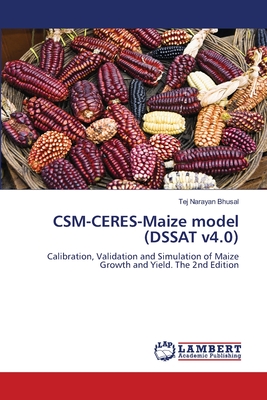
CSM-CERES-Maize model (DSSAT v4.0)
| AUTHOR | Bhusal, Tej Narayan |
| PUBLISHER | LAP Lambert Academic Publishing (08/04/2025) |
| PRODUCT TYPE | Paperback (Paperback) |
Description
In recent years, the use of crop models has grown exponentially for agro-climatic and site-specific resource management aimed at increasing grain yield. Among these models, CMS-CERES-Maize is one of the most prominent. However, limited academic literature exists on how to best utilize such simulation models to optimize yield in developing countries like Nepal. Calibration and validation using available datasets are prerequisites for effective application. Site-specific management of resources-such as nitrogen (dose, timing, and method) and water (amount and timing)-has been shown to increase maize yield while minimizing losses. Similarly, factors such as annual climate variation, sowing dates, and initial soil moisture content significantly affect yield performance. Findings from this study suggest that changes in the magnitude of climatic parameters can place stress on resource management systems, thereby affecting grain yield. This analysis contributes to a better understanding of this emerging field and may be particularly useful to professionals and others involved in agriculture.
Show More
Product Format
Product Details
ISBN-13:
9786207467747
ISBN-10:
6207467744
Binding:
Paperback or Softback (Trade Paperback (Us))
Content Language:
English
More Product Details
Page Count:
132
Carton Quantity:
54
Product Dimensions:
6.00 x 0.31 x 9.00 inches
Weight:
0.41 pound(s)
Country of Origin:
US
Subject Information
BISAC Categories
Science | Life Sciences - Horticulture
Descriptions, Reviews, Etc.
publisher marketing
In recent years, the use of crop models has grown exponentially for agro-climatic and site-specific resource management aimed at increasing grain yield. Among these models, CMS-CERES-Maize is one of the most prominent. However, limited academic literature exists on how to best utilize such simulation models to optimize yield in developing countries like Nepal. Calibration and validation using available datasets are prerequisites for effective application. Site-specific management of resources-such as nitrogen (dose, timing, and method) and water (amount and timing)-has been shown to increase maize yield while minimizing losses. Similarly, factors such as annual climate variation, sowing dates, and initial soil moisture content significantly affect yield performance. Findings from this study suggest that changes in the magnitude of climatic parameters can place stress on resource management systems, thereby affecting grain yield. This analysis contributes to a better understanding of this emerging field and may be particularly useful to professionals and others involved in agriculture.
Show More
Your Price
$93.81