
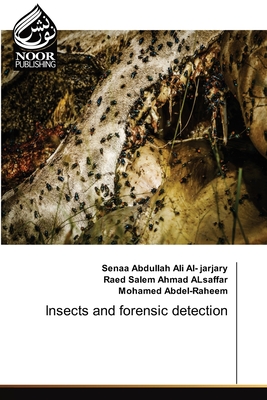
Insects and forensic detection
| AUTHOR | Salem Ahmad Alsaffar, Raed; Abdullah Ali Al- Jarjary, Senaa; Abdel-Raheem, Mohamed |
| PUBLISHER | Noor Publishing (05/21/2024) |
| PRODUCT TYPE | Paperback (Paperback) |
Description
Forensic science continues to rely on important clues from the world of invertebrates. Below, you can find information on the types of insects used in forensic investigations and the reasons behind their use. Forensic scientists rely on a variety of insects for their detection work, with an emphasis on flies (Diptera) and beetles (Coleoptera). Flies lay larvae that consume cadaver organs and tissues. As the corpse dries out, beetles take over the decomposition process.Other invertebrates, including those in the soil; also colonize the area around the cadaver. Flies are crucial in forensic investigations, with Diptera species such as Calliphoridae (blow flies) being commonly involved. Blow flies are known for feeding on corpses and can arrive at the scene within minutes to hours of death. Examples of species include Chrysomya megacephala, Chrysomya rufifacies, Gaiijbhoria vicrna, and Lucilia sericata. Understanding the behavior and ecology of blow flies can aid in forensic detection. For instance, Lucilia illustris is typically found in bright, open habitats, while Phormia regina prefers shaded areas.
Show More
Product Format
Product Details
ISBN-13:
9786207478415
ISBN-10:
620747841X
Binding:
Paperback or Softback (Trade Paperback (Us))
Content Language:
English
More Product Details
Page Count:
160
Carton Quantity:
44
Product Dimensions:
6.00 x 0.37 x 9.00 inches
Weight:
0.54 pound(s)
Country of Origin:
US
Subject Information
BISAC Categories
Science | Life Sciences - Horticulture
Descriptions, Reviews, Etc.
publisher marketing
Forensic science continues to rely on important clues from the world of invertebrates. Below, you can find information on the types of insects used in forensic investigations and the reasons behind their use. Forensic scientists rely on a variety of insects for their detection work, with an emphasis on flies (Diptera) and beetles (Coleoptera). Flies lay larvae that consume cadaver organs and tissues. As the corpse dries out, beetles take over the decomposition process.Other invertebrates, including those in the soil; also colonize the area around the cadaver. Flies are crucial in forensic investigations, with Diptera species such as Calliphoridae (blow flies) being commonly involved. Blow flies are known for feeding on corpses and can arrive at the scene within minutes to hours of death. Examples of species include Chrysomya megacephala, Chrysomya rufifacies, Gaiijbhoria vicrna, and Lucilia sericata. Understanding the behavior and ecology of blow flies can aid in forensic detection. For instance, Lucilia illustris is typically found in bright, open habitats, while Phormia regina prefers shaded areas.
Show More
List Price $47.00
Your Price
$46.53