
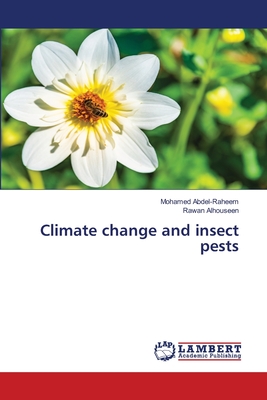
Climate change and insect pests
| AUTHOR | Alhouseen, Rawan; Abdel-Raheem, Mohamed |
| PUBLISHER | LAP Lambert Academic Publishing (03/20/2025) |
| PRODUCT TYPE | Paperback (Paperback) |
Description
For centuries, humans have attempted to control pest insect populations that cause agricultural productions losses, and often chemical insecticides are used to control these insect pests. Unfortunately, extensive use of chemical pesticides contributes to a plethora of issues such as farmers' health risks, food safety issues, reduced biodiversity, reduction or loss of natural enemies, pollinators, and other non-target organisms, and emergence of pesticide resistance. Historically, the use of chemical pesticides to control pests made it possible to increase yields and chemical pesticides will probably continue to be a vital tool that can maintain and improve yields in future sustainable plant production systems but only in combination with new technologies and non-chemical alternatives. Driven by the desire to develop alternative methods, a number of studies have explored the use of a natural enemies to control insect pests.
Show More
Product Format
Product Details
ISBN-13:
9786208437299
ISBN-10:
6208437296
Binding:
Paperback or Softback (Trade Paperback (Us))
Content Language:
English
More Product Details
Page Count:
188
Carton Quantity:
38
Product Dimensions:
6.00 x 0.43 x 9.00 inches
Weight:
0.57 pound(s)
Country of Origin:
US
Subject Information
BISAC Categories
Science | Life Sciences - Horticulture
Descriptions, Reviews, Etc.
publisher marketing
For centuries, humans have attempted to control pest insect populations that cause agricultural productions losses, and often chemical insecticides are used to control these insect pests. Unfortunately, extensive use of chemical pesticides contributes to a plethora of issues such as farmers' health risks, food safety issues, reduced biodiversity, reduction or loss of natural enemies, pollinators, and other non-target organisms, and emergence of pesticide resistance. Historically, the use of chemical pesticides to control pests made it possible to increase yields and chemical pesticides will probably continue to be a vital tool that can maintain and improve yields in future sustainable plant production systems but only in combination with new technologies and non-chemical alternatives. Driven by the desire to develop alternative methods, a number of studies have explored the use of a natural enemies to control insect pests.
Show More
Your Price
$108.06