
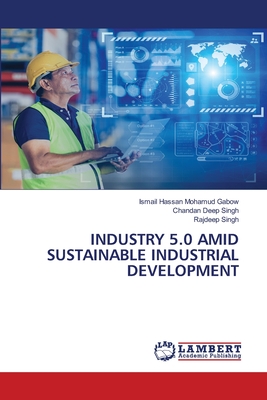
Industry 5.0 Amid Sustainable Industrial Development
| AUTHOR | Gabow, Ismail Hassan Mohamud; Singh, Chandan Deep; Singh, Rajdeep |
| PUBLISHER | LAP Lambert Academic Publishing (05/19/2025) |
| PRODUCT TYPE | Paperback (Paperback) |
Description
Industry 5.0 represents a transformative shift in industrial development, moving beyond the automation-driven approach of Industry 4.0 to a more human-centric, sustainable, and resilient manufacturing paradigm. This thesis explores the role of Industry 5.0 in achieving sustainable development by integrating human intelligence with emerging technologies such as artificial intelligence (AI), the Internet of Things (IoT), and advanced robotics. The study employs the Analytic Hierarchy Process (AHP) to systematically assess key factors influencing the adoption of Industry 5.0, including environmental sustainability, economic feasibility, technological advancement, and social impact. The research findings indicate that Industry 5.0 enhances resource efficiency, reduces waste, and fosters innovation by leveraging collaborative human-machine interaction. Furthermore, the study highlights the importance of Industry 5.0 in addressing global sustainability challenges by promoting circular economy practices, responsible production, and energy-efficient manufacturing.
Show More
Product Format
Product Details
ISBN-13:
9786208446130
ISBN-10:
6208446139
Binding:
Paperback or Softback (Trade Paperback (Us))
Content Language:
English
More Product Details
Page Count:
80
Carton Quantity:
88
Product Dimensions:
6.00 x 0.19 x 9.00 inches
Weight:
0.26 pound(s)
Country of Origin:
US
Subject Information
BISAC Categories
Technology & Engineering | Engineering (General)
Descriptions, Reviews, Etc.
publisher marketing
Industry 5.0 represents a transformative shift in industrial development, moving beyond the automation-driven approach of Industry 4.0 to a more human-centric, sustainable, and resilient manufacturing paradigm. This thesis explores the role of Industry 5.0 in achieving sustainable development by integrating human intelligence with emerging technologies such as artificial intelligence (AI), the Internet of Things (IoT), and advanced robotics. The study employs the Analytic Hierarchy Process (AHP) to systematically assess key factors influencing the adoption of Industry 5.0, including environmental sustainability, economic feasibility, technological advancement, and social impact. The research findings indicate that Industry 5.0 enhances resource efficiency, reduces waste, and fosters innovation by leveraging collaborative human-machine interaction. Furthermore, the study highlights the importance of Industry 5.0 in addressing global sustainability challenges by promoting circular economy practices, responsible production, and energy-efficient manufacturing.
Show More
Your Price
$60.56