
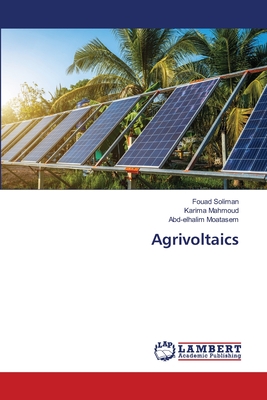
Agrivoltaics
| AUTHOR | Moatasem, Abd-Elhalim; Mahmoud, Karima; Soliman, Fouad |
| PUBLISHER | LAP Lambert Academic Publishing (05/21/2025) |
| PRODUCT TYPE | Paperback (Paperback) |
Description
Agrivoltaics is the dual use of land for solar energy production and agriculture. The technique was first conceived by Adolf Goetzberger and Armin Zastrow in 1981. Vertical solar panels, east to west orientation, with bifacial modules near Donaueschingen, Germany. Many agricultural activities can be combined with solar, including plant crops, livestock, greenhouses, and wild plants to provide pollinator support. Agrivoltaics system can include solar panels between crops, elevated above crops, or on greenhouses. Solar panels help plants to retain moisture and lower temperatures, and can provide shelter for livestock animals. The dual use of land can also provide a diversified income stream for farmers. Solar panels block light, which means that the design of dual use systems can require trade-offs between optimizing crop yield, crop quality, and energy pro-duction. Some crops and livestock benefit from the increased shade, lessening or even eliminating the trade-off.
Show More
Product Format
Product Details
ISBN-13:
9786208447359
ISBN-10:
6208447356
Binding:
Paperback or Softback (Trade Paperback (Us))
Content Language:
English
More Product Details
Page Count:
144
Carton Quantity:
50
Product Dimensions:
6.00 x 0.34 x 9.00 inches
Weight:
0.44 pound(s)
Country of Origin:
US
Subject Information
BISAC Categories
Technology & Engineering | Electrical
Descriptions, Reviews, Etc.
publisher marketing
Agrivoltaics is the dual use of land for solar energy production and agriculture. The technique was first conceived by Adolf Goetzberger and Armin Zastrow in 1981. Vertical solar panels, east to west orientation, with bifacial modules near Donaueschingen, Germany. Many agricultural activities can be combined with solar, including plant crops, livestock, greenhouses, and wild plants to provide pollinator support. Agrivoltaics system can include solar panels between crops, elevated above crops, or on greenhouses. Solar panels help plants to retain moisture and lower temperatures, and can provide shelter for livestock animals. The dual use of land can also provide a diversified income stream for farmers. Solar panels block light, which means that the design of dual use systems can require trade-offs between optimizing crop yield, crop quality, and energy pro-duction. Some crops and livestock benefit from the increased shade, lessening or even eliminating the trade-off.
Show More
Your Price
$95.00