
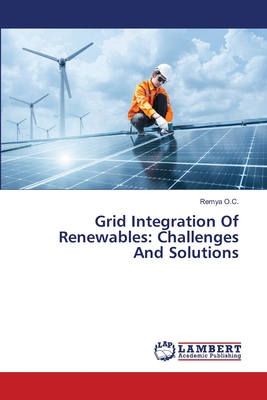
Grid Integration Of Renewables: Challenges And Solutions
| AUTHOR | O. C., Remya |
| PUBLISHER | LAP Lambert Academic Publishing (06/17/2025) |
| PRODUCT TYPE | Paperback (Paperback) |
Description
The transition to clean, sustainable energy is one of the defining challenges and opportunities of our time. Around the world, renewable energy sources such as solar, wind, hydro, and biomass are transforming how electricity is generated and consumed. These technologies promise a future with reduced carbon emissions, lower dependence on fossil fuels, and improved environmental health. Yet, as the share of renewables in the energy mix continues to grow, a critical question arises: how can these resources be effectively and reliably integrated into our existing power grids?Power grids were originally designed for centralized, controllable generation from fossil-fuel-based power plants. In contrast, renewable energy is often decentralized and variable its output depends on weather, time of day, and seasonal patterns. This variability can lead to imbalances between electricity supply and demand, posing challenges for grid stability and reliability. Additionally, many renewable systems are connected at the distribution level, requiring changes to how the grid is monitored, managed, and upgraded.
Show More
Product Format
Product Details
ISBN-13:
9786208452100
ISBN-10:
6208452104
Binding:
Paperback or Softback (Trade Paperback (Us))
Content Language:
English
More Product Details
Page Count:
128
Carton Quantity:
56
Product Dimensions:
6.00 x 0.30 x 9.00 inches
Weight:
0.40 pound(s)
Country of Origin:
US
Subject Information
BISAC Categories
Business & Economics | Careers - General
Descriptions, Reviews, Etc.
publisher marketing
The transition to clean, sustainable energy is one of the defining challenges and opportunities of our time. Around the world, renewable energy sources such as solar, wind, hydro, and biomass are transforming how electricity is generated and consumed. These technologies promise a future with reduced carbon emissions, lower dependence on fossil fuels, and improved environmental health. Yet, as the share of renewables in the energy mix continues to grow, a critical question arises: how can these resources be effectively and reliably integrated into our existing power grids?Power grids were originally designed for centralized, controllable generation from fossil-fuel-based power plants. In contrast, renewable energy is often decentralized and variable its output depends on weather, time of day, and seasonal patterns. This variability can lead to imbalances between electricity supply and demand, posing challenges for grid stability and reliability. Additionally, many renewable systems are connected at the distribution level, requiring changes to how the grid is monitored, managed, and upgraded.
Show More
Your Price
$84.31