
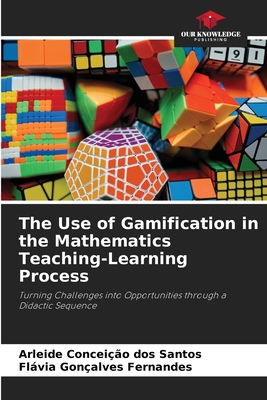
The Use of Gamification in the Mathematics Teaching-Learning Process
| AUTHOR | Dos Santos, Arleide Conceição; Fernandes, Flvia Gonalves |
| PUBLISHER | Our Knowledge Publishing (06/18/2025) |
| PRODUCT TYPE | Paperback (Paperback) |
Description
This book investigates the use of gamification in the teaching-learning process of mathematics in the 8th grade, with a focus on understanding and applying affine functions. Gamification, defined as the incorporation of game elements into non-playful contexts, proved to be an effective methodology for increasing student engagement and motivation, promoting a more dynamic and inclusive learning environment. The didactic sequence developed used games and interactive activities to teach mathematical concepts, allowing students to apply theoretical knowledge in a practical and meaningful way. Analysis of the results indicated an improvement in the students' academic performance and in the development of cognitive and socio-emotional skills, such as critical thinking, problem solving and collaboration. The implementation of gamification, although challenging, was successful due to careful planning, the personalization of activities and the use of educational technologies.
Show More
Product Format
Product Details
ISBN-13:
9786208975210
ISBN-10:
6208975212
Binding:
Paperback or Softback (Trade Paperback (Us))
Content Language:
English
More Product Details
Page Count:
60
Carton Quantity:
118
Product Dimensions:
6.00 x 0.14 x 9.00 inches
Weight:
0.21 pound(s)
Country of Origin:
US
Subject Information
BISAC Categories
Computers | General
Descriptions, Reviews, Etc.
publisher marketing
This book investigates the use of gamification in the teaching-learning process of mathematics in the 8th grade, with a focus on understanding and applying affine functions. Gamification, defined as the incorporation of game elements into non-playful contexts, proved to be an effective methodology for increasing student engagement and motivation, promoting a more dynamic and inclusive learning environment. The didactic sequence developed used games and interactive activities to teach mathematical concepts, allowing students to apply theoretical knowledge in a practical and meaningful way. Analysis of the results indicated an improvement in the students' academic performance and in the development of cognitive and socio-emotional skills, such as critical thinking, problem solving and collaboration. The implementation of gamification, although challenging, was successful due to careful planning, the personalization of activities and the use of educational technologies.
Show More
Your Price
$60.56