
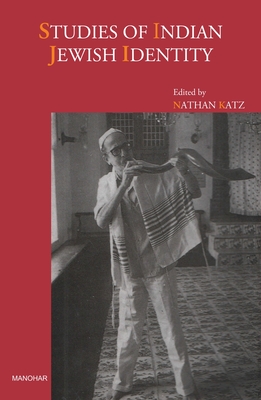
Studies in Indian Jewish Identity
| AUTHOR | Katz, Nathan |
| PUBLISHER | Manohar Books (01/20/2025) |
| PRODUCT TYPE | Hardcover (Hardcover) |
Description
This book about Indian Jewish identity is an attempt at 'self definition'. It raises basic questions like who the Jews of India are, are they Jewish or Indian? It then proceeds to answer them by delving deep into cultural mechanisms by which India's Jews came to define themselves and how they were defined by others. In doing this it explores the conditions by which a group's identity is established and maintained, how it responds to changing conditions and how it anticipates and structures a future.
This book, therefore, is about at least two subjects. First, it is descriptive and ethnographic. It describes the beliefs and attitudes, the rituals and histories, which conditioned the identities of three distinct communities of Indian Jews. Second, it is analytical and therefore reflexive; it adheres to the standard of scholarship which insists that in studying the 'other' we learn about ourselves.
The seven essays in the book analyze Indian Jewish identity as a complex product of four interrelated phenomena. First, there is the historical trajectory, the construction of a suitable narrative. Second, there are social trajectories of the present, the patterns underlying social interactions with Gentile neighbors, which also defined the group. Third, there are the trajectories of the future, which is to say how modernization, Zionism and Indian nationalism came to reconstellate Jewish identity by directing toward new sometimes competing, goals. Finally, there is the role of religion, not merely as a template of ethnic identity but as a system of rituals and norms which defined and celebrated the very identities of India's Jews.
This book, therefore, is about at least two subjects. First, it is descriptive and ethnographic. It describes the beliefs and attitudes, the rituals and histories, which conditioned the identities of three distinct communities of Indian Jews. Second, it is analytical and therefore reflexive; it adheres to the standard of scholarship which insists that in studying the 'other' we learn about ourselves.
The seven essays in the book analyze Indian Jewish identity as a complex product of four interrelated phenomena. First, there is the historical trajectory, the construction of a suitable narrative. Second, there are social trajectories of the present, the patterns underlying social interactions with Gentile neighbors, which also defined the group. Third, there are the trajectories of the future, which is to say how modernization, Zionism and Indian nationalism came to reconstellate Jewish identity by directing toward new sometimes competing, goals. Finally, there is the role of religion, not merely as a template of ethnic identity but as a system of rituals and norms which defined and celebrated the very identities of India's Jews.
Show More
Product Format
Product Details
ISBN-13:
9788173040719
ISBN-10:
8173040710
Binding:
Hardback or Cased Book (Sewn)
Content Language:
English
More Product Details
Page Count:
218
Carton Quantity:
0
Product Dimensions:
6.00 x 0.70 x 9.00 inches
Weight:
1.00 pound(s)
Country of Origin:
IN
Subject Information
BISAC Categories
Unassigned | Asia - South - General
Unassigned | Jewish Studies
Unassigned | Cultural & Ethnic Studies - Asian Studies
Dewey Decimal:
954.004
Library of Congress Control Number:
95905235
Descriptions, Reviews, Etc.
publisher marketing
This book about Indian Jewish identity is an attempt at 'self definition'. It raises basic questions like who the Jews of India are, are they Jewish or Indian? It then proceeds to answer them by delving deep into cultural mechanisms by which India's Jews came to define themselves and how they were defined by others. In doing this it explores the conditions by which a group's identity is established and maintained, how it responds to changing conditions and how it anticipates and structures a future.
This book, therefore, is about at least two subjects. First, it is descriptive and ethnographic. It describes the beliefs and attitudes, the rituals and histories, which conditioned the identities of three distinct communities of Indian Jews. Second, it is analytical and therefore reflexive; it adheres to the standard of scholarship which insists that in studying the 'other' we learn about ourselves.
The seven essays in the book analyze Indian Jewish identity as a complex product of four interrelated phenomena. First, there is the historical trajectory, the construction of a suitable narrative. Second, there are social trajectories of the present, the patterns underlying social interactions with Gentile neighbors, which also defined the group. Third, there are the trajectories of the future, which is to say how modernization, Zionism and Indian nationalism came to reconstellate Jewish identity by directing toward new sometimes competing, goals. Finally, there is the role of religion, not merely as a template of ethnic identity but as a system of rituals and norms which defined and celebrated the very identities of India's Jews.
This book, therefore, is about at least two subjects. First, it is descriptive and ethnographic. It describes the beliefs and attitudes, the rituals and histories, which conditioned the identities of three distinct communities of Indian Jews. Second, it is analytical and therefore reflexive; it adheres to the standard of scholarship which insists that in studying the 'other' we learn about ourselves.
The seven essays in the book analyze Indian Jewish identity as a complex product of four interrelated phenomena. First, there is the historical trajectory, the construction of a suitable narrative. Second, there are social trajectories of the present, the patterns underlying social interactions with Gentile neighbors, which also defined the group. Third, there are the trajectories of the future, which is to say how modernization, Zionism and Indian nationalism came to reconstellate Jewish identity by directing toward new sometimes competing, goals. Finally, there is the role of religion, not merely as a template of ethnic identity but as a system of rituals and norms which defined and celebrated the very identities of India's Jews.
Show More
Author:
Katz, Nathan
Nathan Katz is Professor and Chair of Religious Studies at Florida International University, and the author of "The Last Jews of Cochin: Jewish Identity in Hindu India" (1993) and editor of "Studies of Indian Jewish Identity" (1995).
Show More
List Price $57.99
Your Price
$57.41