
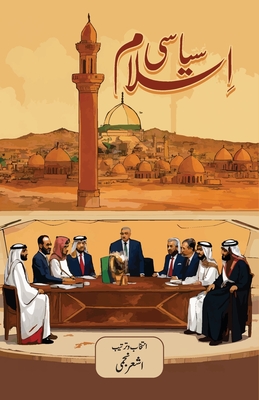
Siyasi Islam: Political Islam
| AUTHOR | Najmi, Ashar |
| PUBLISHER | Bright Books (11/26/2024) |
| PRODUCT TYPE | Paperback (Paperback) |
The term "political Islam" has gained considerable currency in recent times. It is used to denote the manner in which religion is employed in the political sphere and the ramifications of such an employment. A review of historical evidence reveals that the nexus between religion and politics is not a novel phenomenon. In nearly every major civilization throughout history, rulers have employed religion for political purposes, utilizing it as a means of justifying their authority.
In this regard, Muslim rulers also employed Islam for their political purposes. Scholars and jurists also occupied prominent roles within the state apparatus during periods of Muslim rule. Consequently, they endeavored to enhance the authority of the rulers and legitimized their decrees through religious justifications, thereby fostering compliance and allegiance among the populace. Historical evidence indicates that when a ruler required a fatwa pertaining to his personal or political affairs, the muftis and jurists promptly issued the desired fatwa and provided religious justification for the ruler's actions and orders. To illustrate, when Akbar desired to make more than four wives permissible from a religious standpoint, the Maliki judge ruled them lawful under Maliki jurisprudence and promptly resolved the issue. It is notable that following this fatwa, Akbar promptly dismissed the judge in order to prevent other princes from exploiting it and to preclude the establishment of a precedent allowing for more than four wives. A substantial number of such fatwas exist in historical records, in which the appropriation of power, the killing of rebels, the expenditure of royal funds from the treasury, and the initiation of warfare with both Muslim and non-Muslim entities have been deemed to be in accordance with religious teachings. In consequence, throughout history, those of a politically powerful disposition have made use of religion for their own interests and desires.
The term "political Islam" has gained considerable currency in recent times. It is used to denote the manner in which religion is employed in the political sphere and the ramifications of such an employment. A review of historical evidence reveals that the nexus between religion and politics is not a novel phenomenon. In nearly every major civilization throughout history, rulers have employed religion for political purposes, utilizing it as a means of justifying their authority.
In this regard, Muslim rulers also employed Islam for their political purposes. Scholars and jurists also occupied prominent roles within the state apparatus during periods of Muslim rule. Consequently, they endeavored to enhance the authority of the rulers and legitimized their decrees through religious justifications, thereby fostering compliance and allegiance among the populace. Historical evidence indicates that when a ruler required a fatwa pertaining to his personal or political affairs, the muftis and jurists promptly issued the desired fatwa and provided religious justification for the ruler's actions and orders. To illustrate, when Akbar desired to make more than four wives permissible from a religious standpoint, the Maliki judge ruled them lawful under Maliki jurisprudence and promptly resolved the issue. It is notable that following this fatwa, Akbar promptly dismissed the judge in order to prevent other princes from exploiting it and to preclude the establishment of a precedent allowing for more than four wives. A substantial number of such fatwas exist in historical records, in which the appropriation of power, the killing of rebels, the expenditure of royal funds from the treasury, and the initiation of warfare with both Muslim and non-Muslim entities have been deemed to be in accordance with religious teachings. In consequence, throughout history, those of a politically powerful disposition have made use of religion for their own interests and desires.