
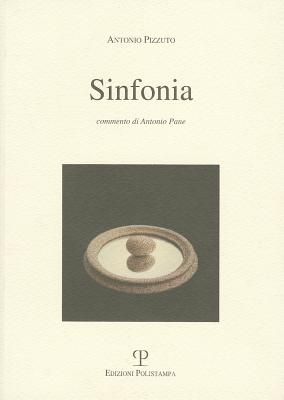
Sinfonia
| AUTHOR | Pane, Antonio; Pizzuto, Antonio |
| PUBLISHER | Edizioni Polistampa (12/31/2012) |
| PRODUCT TYPE | Paperback (Paperback) |
Description
Sinfonia marks a critical turning-point in Pizzuto s work. In a final break with narrative unity, he eliminates the human protagonist (of whom there were still traces in Lumpi di Paginette, as if to preserve the book s novelistic character). By renouncing facts and their authors (which, says Pizzuto, must stay in parentheses ), the author creates a narrative without bearings a collection of unrelated facts that readers must connect by means of an intuition shared with the author. Absent the familiar bearings of a plot, Pizzuto s text builds up as a series of life fragments ( rerum vitalium fragmenta, as Marzio Pieri calls them) in a space that excludes causal links between them, and in a suspended time frame where each fragment returns to its origin and its random present. Life s epiphanies orbit inside this particle field. We see the magic funicular of Palermo, an impossible love, a musical friendship, a village perched in the Sicilian mountains, a school outing, a schoolteacher, and instantaneous happenings. There are the floating particles of the writer s imagination, which occasionally connect with the war never fought, prehistoric night or unfathomable reveries (the invasion of snakes, the moving forest, the anthropomorphic sea creature). These themes already present in Pizzuto s youthful Symphony return here to bear witness to the creative continuity that he sought to maintain in his work. Antonio Pane s commentary seeks to identify, as far as possible, the individual tesserae of the variegated mosaic, applying the methods successfully used in his commentary on Testamento: reconstruction of the space-time coordinates obscured by Pizzuto s deliberate removal of context; search for autobiographical references and allusions to the author s family and friends; identification of specific sources; intertextual synopses; clarification of the many literary, philosophical, scientific, and scholarly references; and citations from the variants contained in the original manuscript.
Show More
Product Format
Product Details
ISBN-13:
9788859610359
ISBN-10:
8859610354
Binding:
Paperback or Softback (Trade Paperback (Us))
Content Language:
Italian
More Product Details
Page Count:
356
Carton Quantity:
1
Product Dimensions:
5.80 x 1.00 x 8.20 inches
Weight:
1.27 pound(s)
Feature Codes:
Bibliography,
Index
Country of Origin:
US
Subject Information
BISAC Categories
Science | Life Sciences - Evolution
Library of Congress Control Number:
2012439152
Descriptions, Reviews, Etc.
publisher marketing
Sinfonia marks a critical turning-point in Pizzuto s work. In a final break with narrative unity, he eliminates the human protagonist (of whom there were still traces in Lumpi di Paginette, as if to preserve the book s novelistic character). By renouncing facts and their authors (which, says Pizzuto, must stay in parentheses ), the author creates a narrative without bearings a collection of unrelated facts that readers must connect by means of an intuition shared with the author. Absent the familiar bearings of a plot, Pizzuto s text builds up as a series of life fragments ( rerum vitalium fragmenta, as Marzio Pieri calls them) in a space that excludes causal links between them, and in a suspended time frame where each fragment returns to its origin and its random present. Life s epiphanies orbit inside this particle field. We see the magic funicular of Palermo, an impossible love, a musical friendship, a village perched in the Sicilian mountains, a school outing, a schoolteacher, and instantaneous happenings. There are the floating particles of the writer s imagination, which occasionally connect with the war never fought, prehistoric night or unfathomable reveries (the invasion of snakes, the moving forest, the anthropomorphic sea creature). These themes already present in Pizzuto s youthful Symphony return here to bear witness to the creative continuity that he sought to maintain in his work. Antonio Pane s commentary seeks to identify, as far as possible, the individual tesserae of the variegated mosaic, applying the methods successfully used in his commentary on Testamento: reconstruction of the space-time coordinates obscured by Pizzuto s deliberate removal of context; search for autobiographical references and allusions to the author s family and friends; identification of specific sources; intertextual synopses; clarification of the many literary, philosophical, scientific, and scholarly references; and citations from the variants contained in the original manuscript.
Show More
Your Price
$39.60