
ISBN 9789264039513 is out of print and is currently unavailable, alternate formats (if applicable) are shown below.
Available options are listed below:
Available options are listed below:
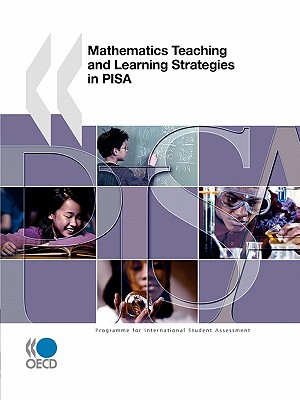
PISA Mathematics Teaching and Learning Strategies in PISA (Out of print)
| AUTHOR | Organization for Economic Cooperation and Development; OECD Publishing |
| PUBLISHER | Org. for Economic Cooperation & Development (09/21/2010) |
| PRODUCT TYPE | Paperback (Paperback) |
Description
What differences exist in the teaching and learning practices of mathematics in different countries? To what extent do teaching and learning practices vary from school to school within each country? Which aspects of teaching and learning are associated with better or worse performance in mathematics? Are strategies universal or context-specific? The OECD Programme for International Student Assessment (PISA) seeks to provide some answers to these questions through this thematic report. Mathematics Teaching and Learning Strategies in PISA uses data from the PISA 2003 assessment to examine the relationships between teaching strategies, student learning strategies and mathematics achievement. The report aims to identify instructional practices and learning strategies that contribute to increased achievement in mathematics and general knowledge. It then explains how these strategies may be related to different countries' school system structures. This report offers policy insights and stimulates new research to complement and further develop the recent OECD Teaching and Learning International Survey (TALIS) and the upcoming PISA 2012 assessment, which will again focus on mathematics. In addition, this report may be of interest to teachers, educators and officials within national and local educational authorities responsible for the professional development of teachers or for programme development, as well as members of school boards and parent advisory bodies. FURTHER READING: The first results from PISA 2003 were published in Learning for Tomorrow's World: First Results from PISA 2003 (OECD, 2004). THE OECD PROGRAMME FOR INTERNATIONAL STUDENT ASSESSMENT (PISA): PISA is a collaborative process among the 30 member countries of the OECD and more than 30 partner countries and economies. It brings together scientific expertise from the participating countries and is steered by their governments on the basis of shared, policy-driven interests. PISA is an unprecedented attempt to measure student achievement, as is evident from some of its features: The literacy approach: PISA aims to define each assessment area (mathematics, science, reading and problem solving) not mainly in terms of mastery of the school curriculum, but in terms of the knowledge and skills needed for full participation in society. A long-term commitment: It will enable countries to monitor regularly and predictably their progress in meeting key learning objectives. The age-group covered: By assessing 15-year-olds, i.e. young people near the end of their compulsory education, PISA provides a significant indication of the overall performance of school systems. The relevance to lifelong learning: PISA does not limit itself to assessing students' knowledge and skills but also asks them to report on their own motivation to learn, their beliefs about themselves and their learning strategies.
Show More
Product Format
Product Details
ISBN-13:
9789264039513
ISBN-10:
9264039511
Binding:
Paperback or Softback (Trade Paperback (Us))
Content Language:
English
More Product Details
Page Count:
176
Carton Quantity:
25
Product Dimensions:
8.25 x 0.38 x 11.00 inches
Weight:
0.91 pound(s)
Country of Origin:
US
Subject Information
BISAC Categories
Business & Economics | Education
Business & Economics | General
Business & Economics | Development - Economic Development
Dewey Decimal:
510
Descriptions, Reviews, Etc.
publisher marketing
What differences exist in the teaching and learning practices of mathematics in different countries? To what extent do teaching and learning practices vary from school to school within each country? Which aspects of teaching and learning are associated with better or worse performance in mathematics? Are strategies universal or context-specific? The OECD Programme for International Student Assessment (PISA) seeks to provide some answers to these questions through this thematic report. Mathematics Teaching and Learning Strategies in PISA uses data from the PISA 2003 assessment to examine the relationships between teaching strategies, student learning strategies and mathematics achievement. The report aims to identify instructional practices and learning strategies that contribute to increased achievement in mathematics and general knowledge. It then explains how these strategies may be related to different countries' school system structures. This report offers policy insights and stimulates new research to complement and further develop the recent OECD Teaching and Learning International Survey (TALIS) and the upcoming PISA 2012 assessment, which will again focus on mathematics. In addition, this report may be of interest to teachers, educators and officials within national and local educational authorities responsible for the professional development of teachers or for programme development, as well as members of school boards and parent advisory bodies. FURTHER READING: The first results from PISA 2003 were published in Learning for Tomorrow's World: First Results from PISA 2003 (OECD, 2004). THE OECD PROGRAMME FOR INTERNATIONAL STUDENT ASSESSMENT (PISA): PISA is a collaborative process among the 30 member countries of the OECD and more than 30 partner countries and economies. It brings together scientific expertise from the participating countries and is steered by their governments on the basis of shared, policy-driven interests. PISA is an unprecedented attempt to measure student achievement, as is evident from some of its features: The literacy approach: PISA aims to define each assessment area (mathematics, science, reading and problem solving) not mainly in terms of mastery of the school curriculum, but in terms of the knowledge and skills needed for full participation in society. A long-term commitment: It will enable countries to monitor regularly and predictably their progress in meeting key learning objectives. The age-group covered: By assessing 15-year-olds, i.e. young people near the end of their compulsory education, PISA provides a significant indication of the overall performance of school systems. The relevance to lifelong learning: PISA does not limit itself to assessing students' knowledge and skills but also asks them to report on their own motivation to learn, their beliefs about themselves and their learning strategies.
Show More
List Price $63.00
Your Price
$62.37