
Back to Search

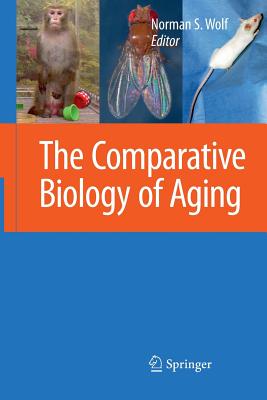
Comparative Biology of Aging

PUBLISHER Springer (11/12/2014)
PRODUCT TYPE Paperback (Paperback)

Description
determined by an inability to move in response to touch. C. elegans develop through four larval stages following hatching and prior to adulthood. Adult C. elegans are reproductive for about the rst week of adulthood followed by approximately two weeks of post-reproductive adulthood prior to death. Life span is most commonly measured in the laboratory by maintaining the worms on the surface of a nutrie- agar medium (Nematode Growth Medium, NGM) with E. coli OP50 as the bacterial food source (REF). Alternative culture conditions have been described in liquid media; however, these are not widely used for longevity studies. Longevity of the commonly used wild type C. elegans hermaphrodite (N2) varies ? from 16 to 23 days under standard laboratory conditions (20 C, NGM agar, E. coli OP50 food source). Life span can be increased by maintaining animals at lower ambient temperatures and shortened by raising the ambient temperature. Use of a killed bacterial food source, rather than live E. coli, increases lifespan by 2-4 days, and growth of adult animals in the absence of bacteria (axenic growth or bac- rial deprivation) increases median life span to 32-38 days [3, 23, 24]. Under both standard laboratory conditions and bacterial deprivation conditions, wild-derived C. elegans hermaphrodites exhibit longevity comparable to N2 animals [25].
Show More
Product Format
Product Details
ISBN-13: 9789400790834
ISBN-10: 940079083X
Binding: Paperback or Softback (Trade Paperback (Us))
Content Language: English
More Product Details
Page Count: 391
Carton Quantity: 20
Product Dimensions: 6.14 x 0.83 x 9.21 inches
Weight: 1.24 pound(s)
Feature Codes: Illustrated
Country of Origin: NL
Subject Information
BISAC Categories
Science | Life Sciences - Anatomy & Physiology
Science | Life Sciences - Developmental Biology
Science | Geriatrics
Dewey Decimal: 571.878
Descriptions, Reviews, Etc.
jacket back

Cover copy: Wolf, Norman (ed.), The Comparative Biology of Aging

The processes of aging and death remain one of the most fascinating, and mysterious, areas of biological research. Huge anomalies between species raise questions the answers to which could have fundamental implications for the field of medical science. As scientists unlock the secrets of the exceptionally long-lived little brown bat (up to 34 years), or the common Budgerigar which despite having a metabolic rate 1.5 times that of a laboratory mouse, can live for up to 20 years, it has become more important than ever to be able to make a comparative analysis of the various species used in research.

Dealing with every one of the species that are employed in laboratory research, this is the first book on the subject of aging that provides detailed comparative data for age-related changes in its subjects. It does so at the level of the whole animal, its organs, organelles and molecules. The comparative data, supplied in 15 chapters by leading experts, provides information on fields as disparate as telomere function and loss, the importance of the Sirtuins and Tor, the influence of hormones on lifespans, the relationship between body size and lifespan, the effects of restricted calorific intake, age-related changes in cell replication, and DNA damage and repair. Chapters are devoted to cardiac aging, comparative skeletal muscle aging, the aging of the nervous and immune systems, the comparative biology of lyosomal function and how it is affected by age, and many other key areas of research.

This much-needed text will provide scientists working in a wide spectrum of fields with key data to aid them in their studies.

Show More
publisher marketing
determined by an inability to move in response to touch. C. elegans develop through four larval stages following hatching and prior to adulthood. Adult C. elegans are reproductive for about the rst week of adulthood followed by approximately two weeks of post-reproductive adulthood prior to death. Life span is most commonly measured in the laboratory by maintaining the worms on the surface of a nutrie- agar medium (Nematode Growth Medium, NGM) with E. coli OP50 as the bacterial food source (REF). Alternative culture conditions have been described in liquid media; however, these are not widely used for longevity studies. Longevity of the commonly used wild type C. elegans hermaphrodite (N2) varies ? from 16 to 23 days under standard laboratory conditions (20 C, NGM agar, E. coli OP50 food source). Life span can be increased by maintaining animals at lower ambient temperatures and shortened by raising the ambient temperature. Use of a killed bacterial food source, rather than live E. coli, increases lifespan by 2-4 days, and growth of adult animals in the absence of bacteria (axenic growth or bac- rial deprivation) increases median life span to 32-38 days [3, 23, 24]. Under both standard laboratory conditions and bacterial deprivation conditions, wild-derived C. elegans hermaphrodites exhibit longevity comparable to N2 animals [25].
Show More
List Price $219.99
Your Price  $217.79
Paperback