
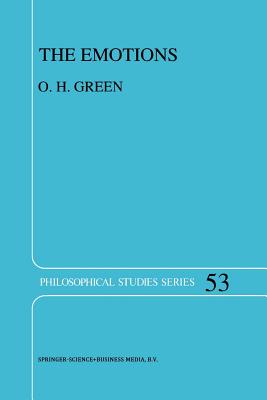
The Emotions: A Philosophical Theory
| AUTHOR | Green, O. H. |
| PUBLISHER | Springer (09/27/2012) |
| PRODUCT TYPE | Paperback (Paperback) |
Description
Philosophical theories of emotions, and to an extent some theories of scientific psychology, represent attempts to capture the essence of emotions basically as they are conceived in common sense psychology. Although there are problems, the success of explanations of our behavior in terms of believes, desires and emotions creates a presumption that, at some level of abstraction, they reflect important elements in our psychological nature. It is incumbent on a theory of emotions to provide an account of two salient facts about emotions as conceived in common sense psychology. As intentional states, emotions have representational and rational properties: emotions represent states of affairs; and they are rationally related to other mental representations, figure in rational explanations of behavior, and are open to rational assessment. Emotions also have a close relationship to a range of non-intentional phenomena: in typical cases, emotions involve physiological changes, usually associated with the activation of the autonomic nervous system, which are proprioceptively experienced; and they often involve behavioral tendencies, as well.
Show More
Product Format
Product Details
ISBN-13:
9789401051262
ISBN-10:
9401051267
Binding:
Paperback or Softback (Trade Paperback (Us))
Content Language:
English
More Product Details
Page Count:
203
Carton Quantity:
38
Product Dimensions:
6.14 x 0.48 x 9.21 inches
Weight:
0.72 pound(s)
Country of Origin:
NL
Subject Information
BISAC Categories
Reference | General
Reference | Mind & Body
Reference | General
Dewey Decimal:
128.2
Descriptions, Reviews, Etc.
publisher marketing
Philosophical theories of emotions, and to an extent some theories of scientific psychology, represent attempts to capture the essence of emotions basically as they are conceived in common sense psychology. Although there are problems, the success of explanations of our behavior in terms of believes, desires and emotions creates a presumption that, at some level of abstraction, they reflect important elements in our psychological nature. It is incumbent on a theory of emotions to provide an account of two salient facts about emotions as conceived in common sense psychology. As intentional states, emotions have representational and rational properties: emotions represent states of affairs; and they are rationally related to other mental representations, figure in rational explanations of behavior, and are open to rational assessment. Emotions also have a close relationship to a range of non-intentional phenomena: in typical cases, emotions involve physiological changes, usually associated with the activation of the autonomic nervous system, which are proprioceptively experienced; and they often involve behavioral tendencies, as well.
Show More
List Price $109.99
Your Price
$108.89