
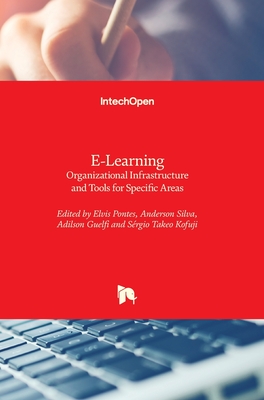
E-Learning: Organizational Infrastructure and Tools for Specific Areas
| PUBLISHER | Intechopen (02/17/2012) |
| PRODUCT TYPE | Hardcover (Hardcover) |
Description
Technology development, mainly for telecommunications and computer systems, was a key factor for the interactivity and, thus, for the expansion of e-learning. This book is divided into two parts, presenting some proposals to deal with e-learning challenges, opening up a way of learning about and discussing new methodologies to increase the interaction level of classes and implementing technical tools for helping students to make better use of e-learning resources. In the first part, the reader may find chapters mentioning the required infrastructure for e-learning models and processes, organizational practices, suggestions, implementation of methods for assessing results, and case studies focused on pedagogical aspects that can be applied generically in different environments. The second part is related to tools that can be adopted by users such as graphical tools for engineering, mobile phone networks, and techniques to build robots, among others. Moreover, part two includes some chapters dedicated specifically to e-learning areas like engineering and architecture.
Show More
Product Format
Product Details
ISBN-13:
9789535100539
ISBN-10:
953510053X
Binding:
Hardback or Cased Book (Sewn)
Content Language:
English
More Product Details
Page Count:
198
Carton Quantity:
34
Product Dimensions:
6.69 x 0.50 x 9.61 inches
Weight:
1.14 pound(s)
Country of Origin:
US
Subject Information
BISAC Categories
Computers | Information Technology
Descriptions, Reviews, Etc.
publisher marketing
Technology development, mainly for telecommunications and computer systems, was a key factor for the interactivity and, thus, for the expansion of e-learning. This book is divided into two parts, presenting some proposals to deal with e-learning challenges, opening up a way of learning about and discussing new methodologies to increase the interaction level of classes and implementing technical tools for helping students to make better use of e-learning resources. In the first part, the reader may find chapters mentioning the required infrastructure for e-learning models and processes, organizational practices, suggestions, implementation of methods for assessing results, and case studies focused on pedagogical aspects that can be applied generically in different environments. The second part is related to tools that can be adopted by users such as graphical tools for engineering, mobile phone networks, and techniques to build robots, among others. Moreover, part two includes some chapters dedicated specifically to e-learning areas like engineering and architecture.
Show More
List Price $155.00
Your Price
$153.45