
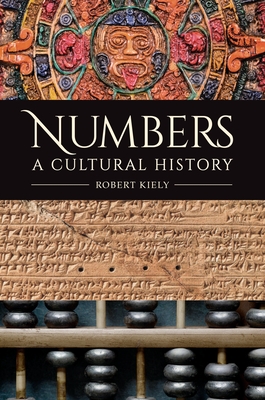
Numbers: A Cultural History
| AUTHOR | Kiely, Robert |
| PUBLISHER | Bloomsbury Academic (10/30/2025) |
| PRODUCT TYPE | Paperback (Paperback) |
Description
Numbers: A Cultural History provides students with a compelling interdisciplinary view of the development of mathematics and its relationship to world cultures over 4,500 years of human history.
Mathematics is often referred to as a "universal language," and that is a fitting description. Many cultures have contributed to mathematics in fascinating ways, but despite its "universal" character, mathematics is also a human endeavor. It has played pivotal roles in societies at particular times; and it has influenced, and been influenced by, a wide range of ideas and institutions, from commerce to philosophy. Ancient Egyptian views of mathematics, for example, are tied closely to engineering and agriculture. Some European Renaissance views, on the other hand, relate the study of numbers to that of the natural world. This work seeks to place the history of mathematics into a broad cultural context. While it treats mathematical material in detail, it also relates that material to other subject matter: science, philosophy, navigation, commerce, religion, art, and architecture. It examines how mathematical thinking grows in specific cultural settings and how it has shaped those settings in turn. It also explores the movement of ideas between cultures and the evolution of modern mathematics and the quantitative, data-driven world in which we live.
Show More
Product Format
Product Details
ISBN-13:
9798216384458
Binding:
Paperback or Softback (Trade Paperback (Us))
Content Language:
English
More Product Details
Page Count:
368
Carton Quantity:
22
Product Dimensions:
6.14 x 0.75 x 9.21 inches
Weight:
1.12 pound(s)
Country of Origin:
US
Subject Information
BISAC Categories
History | Ancient - General
History | History
History | Modern - General
Descriptions, Reviews, Etc.
publisher marketing
Numbers: A Cultural History provides students with a compelling interdisciplinary view of the development of mathematics and its relationship to world cultures over 4,500 years of human history.
Mathematics is often referred to as a "universal language," and that is a fitting description. Many cultures have contributed to mathematics in fascinating ways, but despite its "universal" character, mathematics is also a human endeavor. It has played pivotal roles in societies at particular times; and it has influenced, and been influenced by, a wide range of ideas and institutions, from commerce to philosophy. Ancient Egyptian views of mathematics, for example, are tied closely to engineering and agriculture. Some European Renaissance views, on the other hand, relate the study of numbers to that of the natural world. This work seeks to place the history of mathematics into a broad cultural context. While it treats mathematical material in detail, it also relates that material to other subject matter: science, philosophy, navigation, commerce, religion, art, and architecture. It examines how mathematical thinking grows in specific cultural settings and how it has shaped those settings in turn. It also explores the movement of ideas between cultures and the evolution of modern mathematics and the quantitative, data-driven world in which we live.
Show More
Your Price
$29.65