
Available options are listed below:
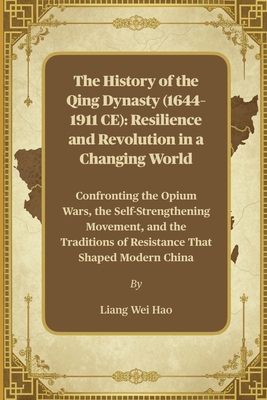
The History of the Qing Dynasty (1644-1911 CE): Resilience and Revolution in a Changing World: Confronting the Opium Wars, the Self-Strengthening Move
| AUTHOR | Hao, Liang Wei |
| PUBLISHER | Independently Published (09/06/2025) |
| PRODUCT TYPE | Paperback (Paperback) |
This book tells the story of the last imperial dynasty to rule China. It begins with the dynasty's origins, exploring how a group from beyond the Great Wall rose to conquer a vast empire and establish a long period of prosperity and cultural achievement. The narrative then follows the challenges that emerged, as internal rebellions and widespread corruption began to weaken the government from within. The story details the devastating clashes with foreign powers, known as the Opium Wars, which forced China to sign unequal treaties and surrender control of its territory and trade. The book covers the massive civil war that nearly toppled the empire and the following attempts to modernize and strengthen the country by adopting Western technology. It explains the growing fear that China would be carved up by foreign nations and the violent uprising that sought to expel all outside influence. Finally, it describes the final, rushed efforts to reform the government, the spread of revolutionary ideas, and the surprisingly swift collapse of the imperial system after centuries of rule. This account provides a clear look at a pivotal era, showing how a powerful empire's struggle with internal decay and external pressure shaped the modern world.
This book tells the story of the last imperial dynasty to rule China. It begins with the dynasty's origins, exploring how a group from beyond the Great Wall rose to conquer a vast empire and establish a long period of prosperity and cultural achievement. The narrative then follows the challenges that emerged, as internal rebellions and widespread corruption began to weaken the government from within. The story details the devastating clashes with foreign powers, known as the Opium Wars, which forced China to sign unequal treaties and surrender control of its territory and trade. The book covers the massive civil war that nearly toppled the empire and the following attempts to modernize and strengthen the country by adopting Western technology. It explains the growing fear that China would be carved up by foreign nations and the violent uprising that sought to expel all outside influence. Finally, it describes the final, rushed efforts to reform the government, the spread of revolutionary ideas, and the surprisingly swift collapse of the imperial system after centuries of rule. This account provides a clear look at a pivotal era, showing how a powerful empire's struggle with internal decay and external pressure shaped the modern world.