
ISBN 9798267361873 is currently unpriced. Please contact us for pricing.
Available options are listed below:
Available options are listed below:
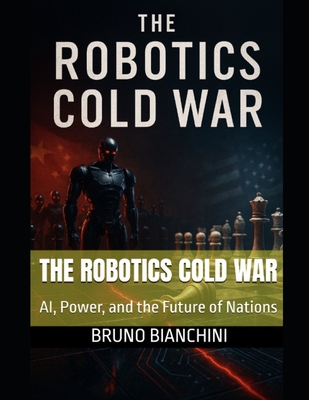
The Robotics Cold War: AI, Power, and the Future of Nations
| AUTHOR | Bianchini, Bruno |
| PUBLISHER | Independently Published (09/27/2025) |
| PRODUCT TYPE | Paperback (Paperback) |
Description
The 21st century will not be defined by oil, but by robotics. In this urgent and provocative analysis, best-selling economist Bruno Bianchini argues that the nation that masters the fusion of artificial intelligence and physical machines will not just lead the global economy-it will dominate the world. We are in the opening stages of a new global conflict: The Robotics Cold War. And the West is losing.
While Western nations debate the ethics of automation, China is building robot armies. Through a riveting combination of on-the-ground reporting, sharp economic analysis, and cinematic storytelling, Bianchini reveals the breathtaking speed and scale of China's "Robotic Blitzkrieg." Readers are taken inside Shenzhen's hyper-efficient supercluster, where prototypes are built in days, and into the "dark factories" where swarms of AI-driven robots work 24/7, making human labor obsolete. Bianchini exposes how China has systematically weaponized the supply chain, cornering the market on rare earths-the new oil-and executing a brilliant hybrid strategy of state subsidies and ferocious competition to outmaneuver its rivals.
The Robotics Cold War is a global investigation that charts this new battlefield:
The Robotics Cold War is not a forecast of a distant future; it is a clear-eyed diagnosis of our dangerous present. Offering a stark analysis of three potential futures-Chinese dominance, a regrouping of the West, or a new multipolar balance-the book culminates in an urgent and unflinching call to action. This is the West's "Toyota moment," a final chance to deregulate, invest, and forge the alliances necessary to compete. The choice is as simple as it is existential: Build or be colonized.
While Western nations debate the ethics of automation, China is building robot armies. Through a riveting combination of on-the-ground reporting, sharp economic analysis, and cinematic storytelling, Bianchini reveals the breathtaking speed and scale of China's "Robotic Blitzkrieg." Readers are taken inside Shenzhen's hyper-efficient supercluster, where prototypes are built in days, and into the "dark factories" where swarms of AI-driven robots work 24/7, making human labor obsolete. Bianchini exposes how China has systematically weaponized the supply chain, cornering the market on rare earths-the new oil-and executing a brilliant hybrid strategy of state subsidies and ferocious competition to outmaneuver its rivals.
The Robotics Cold War is a global investigation that charts this new battlefield:
- Europe's Decline: Through a chilling case study of the takeover of German icon KUKA, Bianchini details Europe's symbolic betrayal-a continent trading its industrial sovereignty for short-term profit, becoming a museum of past glories.
- America's Paradox: The book dissects America's slow awakening, celebrating its brilliant frontier innovation from DARPA to Tesla, while exposing the self-inflicted wounds of regulatory gridlock and a fragile, outsourced supply chain that have led to a decade of stagnant productivity.
- The Rise of the Wildcard: Bianchini identifies India as the critical emerging power, a democratic wildcard whose engineering talent and "Make in India" ambitions could fundamentally alter the global balance of power.
The Robotics Cold War is not a forecast of a distant future; it is a clear-eyed diagnosis of our dangerous present. Offering a stark analysis of three potential futures-Chinese dominance, a regrouping of the West, or a new multipolar balance-the book culminates in an urgent and unflinching call to action. This is the West's "Toyota moment," a final chance to deregulate, invest, and forge the alliances necessary to compete. The choice is as simple as it is existential: Build or be colonized.
Show More
Product Format
Product Details
ISBN-13:
9798267361873
Binding:
Paperback or Softback (Trade Paperback (Us))
Content Language:
English
More Product Details
Page Count:
108
Carton Quantity:
37
Product Dimensions:
8.50 x 0.22 x 11.00 inches
Weight:
0.59 pound(s)
Country of Origin:
US
Subject Information
BISAC Categories
Non-Classifiable | Non-Classifiable
Descriptions, Reviews, Etc.
publisher marketing
The 21st century will not be defined by oil, but by robotics. In this urgent and provocative analysis, best-selling economist Bruno Bianchini argues that the nation that masters the fusion of artificial intelligence and physical machines will not just lead the global economy-it will dominate the world. We are in the opening stages of a new global conflict: The Robotics Cold War. And the West is losing.
While Western nations debate the ethics of automation, China is building robot armies. Through a riveting combination of on-the-ground reporting, sharp economic analysis, and cinematic storytelling, Bianchini reveals the breathtaking speed and scale of China's "Robotic Blitzkrieg." Readers are taken inside Shenzhen's hyper-efficient supercluster, where prototypes are built in days, and into the "dark factories" where swarms of AI-driven robots work 24/7, making human labor obsolete. Bianchini exposes how China has systematically weaponized the supply chain, cornering the market on rare earths-the new oil-and executing a brilliant hybrid strategy of state subsidies and ferocious competition to outmaneuver its rivals.
The Robotics Cold War is a global investigation that charts this new battlefield:
The Robotics Cold War is not a forecast of a distant future; it is a clear-eyed diagnosis of our dangerous present. Offering a stark analysis of three potential futures-Chinese dominance, a regrouping of the West, or a new multipolar balance-the book culminates in an urgent and unflinching call to action. This is the West's "Toyota moment," a final chance to deregulate, invest, and forge the alliances necessary to compete. The choice is as simple as it is existential: Build or be colonized.
While Western nations debate the ethics of automation, China is building robot armies. Through a riveting combination of on-the-ground reporting, sharp economic analysis, and cinematic storytelling, Bianchini reveals the breathtaking speed and scale of China's "Robotic Blitzkrieg." Readers are taken inside Shenzhen's hyper-efficient supercluster, where prototypes are built in days, and into the "dark factories" where swarms of AI-driven robots work 24/7, making human labor obsolete. Bianchini exposes how China has systematically weaponized the supply chain, cornering the market on rare earths-the new oil-and executing a brilliant hybrid strategy of state subsidies and ferocious competition to outmaneuver its rivals.
The Robotics Cold War is a global investigation that charts this new battlefield:
- Europe's Decline: Through a chilling case study of the takeover of German icon KUKA, Bianchini details Europe's symbolic betrayal-a continent trading its industrial sovereignty for short-term profit, becoming a museum of past glories.
- America's Paradox: The book dissects America's slow awakening, celebrating its brilliant frontier innovation from DARPA to Tesla, while exposing the self-inflicted wounds of regulatory gridlock and a fragile, outsourced supply chain that have led to a decade of stagnant productivity.
- The Rise of the Wildcard: Bianchini identifies India as the critical emerging power, a democratic wildcard whose engineering talent and "Make in India" ambitions could fundamentally alter the global balance of power.
The Robotics Cold War is not a forecast of a distant future; it is a clear-eyed diagnosis of our dangerous present. Offering a stark analysis of three potential futures-Chinese dominance, a regrouping of the West, or a new multipolar balance-the book culminates in an urgent and unflinching call to action. This is the West's "Toyota moment," a final chance to deregulate, invest, and forge the alliances necessary to compete. The choice is as simple as it is existential: Build or be colonized.
Show More