
ISBN 9798267779869 is currently unpriced. Please contact us for pricing.
Available options are listed below:
Available options are listed below:
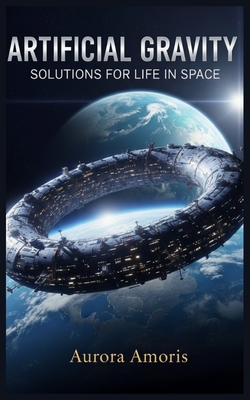
Artificial Gravity: Solutions for Life in Space
| AUTHOR | Amoris, Aurora |
| PUBLISHER | Independently Published (09/30/2025) |
| PRODUCT TYPE | Paperback (Paperback) |
Description
In a future where humanity's survival depends on venturing beyond Earth, one question becomes unavoidable: how can we thrive in a universe without gravity? This groundbreaking work explores the science, technology, and human experience of living in weightlessness, weaving together history, physics, biology, and visionary engineering. From Newton's universal law to Einstein's curved spacetime, from the fragile physiology of astronauts to the bold designs of rotating habitats and Martian colonies, it offers a sweeping narrative of discovery and adaptation.
Richly detailed and deeply human, it reveals how gravity-or its absence-shapes not only our bodies but also our societies, economies, and imagination. With clarity and vision, it examines the challenges of muscle and bone loss, the psychological impact of microgravity, and the promise of artificial environments that could sustain life far from Earth. At once scientific and philosophical, it invites readers to reflect on what it means to be human when the most familiar force of nature is no longer present.
This is not just a study of physics or engineering-it is a meditation on resilience, innovation, and the future of civilization among the stars.
Richly detailed and deeply human, it reveals how gravity-or its absence-shapes not only our bodies but also our societies, economies, and imagination. With clarity and vision, it examines the challenges of muscle and bone loss, the psychological impact of microgravity, and the promise of artificial environments that could sustain life far from Earth. At once scientific and philosophical, it invites readers to reflect on what it means to be human when the most familiar force of nature is no longer present.
This is not just a study of physics or engineering-it is a meditation on resilience, innovation, and the future of civilization among the stars.
Show More
Product Format
Product Details
ISBN-13:
9798267779869
Binding:
Paperback or Softback (Trade Paperback (Us))
Content Language:
English
More Product Details
Page Count:
158
Carton Quantity:
50
Product Dimensions:
5.00 x 0.34 x 8.00 inches
Weight:
0.36 pound(s)
Country of Origin:
US
Subject Information
BISAC Categories
Science | Space Science - Astronomy
Descriptions, Reviews, Etc.
publisher marketing
In a future where humanity's survival depends on venturing beyond Earth, one question becomes unavoidable: how can we thrive in a universe without gravity? This groundbreaking work explores the science, technology, and human experience of living in weightlessness, weaving together history, physics, biology, and visionary engineering. From Newton's universal law to Einstein's curved spacetime, from the fragile physiology of astronauts to the bold designs of rotating habitats and Martian colonies, it offers a sweeping narrative of discovery and adaptation.
Richly detailed and deeply human, it reveals how gravity-or its absence-shapes not only our bodies but also our societies, economies, and imagination. With clarity and vision, it examines the challenges of muscle and bone loss, the psychological impact of microgravity, and the promise of artificial environments that could sustain life far from Earth. At once scientific and philosophical, it invites readers to reflect on what it means to be human when the most familiar force of nature is no longer present.
This is not just a study of physics or engineering-it is a meditation on resilience, innovation, and the future of civilization among the stars.
Richly detailed and deeply human, it reveals how gravity-or its absence-shapes not only our bodies but also our societies, economies, and imagination. With clarity and vision, it examines the challenges of muscle and bone loss, the psychological impact of microgravity, and the promise of artificial environments that could sustain life far from Earth. At once scientific and philosophical, it invites readers to reflect on what it means to be human when the most familiar force of nature is no longer present.
This is not just a study of physics or engineering-it is a meditation on resilience, innovation, and the future of civilization among the stars.
Show More