
ISBN 9798281717236 is currently unpriced. Please contact us for pricing.
Available options are listed below:
Available options are listed below:
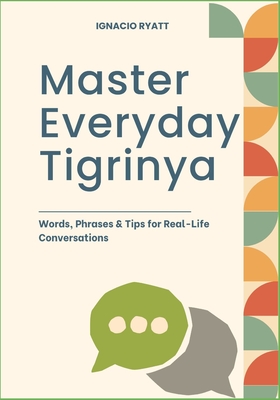
Master Everyday Tigrinya: Words, Phrases & Tips for Real-Life Conversations
| AUTHOR | Ryatt, Ignacio |
| PUBLISHER | Independently Published (04/28/2025) |
| PRODUCT TYPE | Paperback (Paperback) |
Description
Tigrinya is an Afro-Asiatic language that is predominantly spoken in northern Ethiopia and Eritrea. It is closely related to languages such as Tigre and Amharic and is a member of the broader Ethiopian Semitic group. Learning Tigrinya provides a unique perspective on the rich history and culture of the Horn of Africa, particularly the communities of Eritrea and Ethiopia, where it is the primary language of communication for millions of individuals.
Key Features of Tigrinya:
- Script: Tigrinya uses the Ge'ez script (also known as Ethiopic). This script is syllabic, meaning each character represents a syllable rather than a single letter. Ge'ez is an ancient writing system and is also used for languages like Amharic.
- Pronunciation: Tigrinya pronunciation can be tricky for learners because it features a series of unique sounds not typically found in English. The language has emphatic consonants and certain vowels that are pronounced in specific ways depending on context.
- Grammar: Tigrinya has a system of noun classes (like gender and number) and verb conjugations that might take some getting used to. The word order generally follows a subject-object-verb (SOV) pattern.
- Vocabulary: The vocabulary shares similarities with other Ethiopian Semitic languages but also contains loanwords from Arabic, Italian, and other languages due to historical interactions.
- Tone: Like many languages in the region, Tigrinya uses pitch and tone to differentiate between words that otherwise look similar in writing.
Why Learn Tigrinya?
- Cultural Understanding: Learning Tigrinya opens a window into the literature, music, and traditions of Eritrea and northern Ethiopia.
- Travel: If you plan to travel to Eritrea or Ethiopia, Tigrinya can be immensely helpful for communication, especially in more rural areas where English may not be widely spoken.
- Historical Insights: Tigrinya is a key to understanding the ancient kingdoms, religious practices, and oral traditions that have shaped the Horn of Africa.
Tips for Learning Tigrinya:
- Start with the Alphabet: Begin by learning the Ge'ez script. It's foundational for reading and writing in Tigrinya, and it will also help with pronunciation.
- Focus on Basic Phrases: Start with simple, everyday phrases. Greetings and expressions of politeness will go a long way.
- Use Resources: Look for language learning books, apps, and online resources. Language exchange partners, YouTube tutorials, and social media groups can also be helpful.
- Immerse Yourself: Listening to Tigrinya music, watching Eritrean or Ethiopian movies, or interacting with native speakers can help with both listening skills and pronunciation.
- Practice Consistently: Like any language, consistency is key. Try to practice daily, even if only for a few minutes, to build a solid foundation.
Key Features of Tigrinya:
- Script: Tigrinya uses the Ge'ez script (also known as Ethiopic). This script is syllabic, meaning each character represents a syllable rather than a single letter. Ge'ez is an ancient writing system and is also used for languages like Amharic.
- Pronunciation: Tigrinya pronunciation can be tricky for learners because it features a series of unique sounds not typically found in English. The language has emphatic consonants and certain vowels that are pronounced in specific ways depending on context.
- Grammar: Tigrinya has a system of noun classes (like gender and number) and verb conjugations that might take some getting used to. The word order generally follows a subject-object-verb (SOV) pattern.
- Vocabulary: The vocabulary shares similarities with other Ethiopian Semitic languages but also contains loanwords from Arabic, Italian, and other languages due to historical interactions.
- Tone: Like many languages in the region, Tigrinya uses pitch and tone to differentiate between words that otherwise look similar in writing.
Why Learn Tigrinya?
- Cultural Understanding: Learning Tigrinya opens a window into the literature, music, and traditions of Eritrea and northern Ethiopia.
- Travel: If you plan to travel to Eritrea or Ethiopia, Tigrinya can be immensely helpful for communication, especially in more rural areas where English may not be widely spoken.
- Historical Insights: Tigrinya is a key to understanding the ancient kingdoms, religious practices, and oral traditions that have shaped the Horn of Africa.
Tips for Learning Tigrinya:
- Start with the Alphabet: Begin by learning the Ge'ez script. It's foundational for reading and writing in Tigrinya, and it will also help with pronunciation.
- Focus on Basic Phrases: Start with simple, everyday phrases. Greetings and expressions of politeness will go a long way.
- Use Resources: Look for language learning books, apps, and online resources. Language exchange partners, YouTube tutorials, and social media groups can also be helpful.
- Immerse Yourself: Listening to Tigrinya music, watching Eritrean or Ethiopian movies, or interacting with native speakers can help with both listening skills and pronunciation.
- Practice Consistently: Like any language, consistency is key. Try to practice daily, even if only for a few minutes, to build a solid foundation.
Show More
Product Format
Product Details
ISBN-13:
9798281717236
Binding:
Paperback or Softback (Trade Paperback (Us))
Content Language:
English
More Product Details
Page Count:
126
Carton Quantity:
31
Product Dimensions:
7.00 x 0.27 x 10.00 inches
Weight:
0.51 pound(s)
Country of Origin:
US
Subject Information
BISAC Categories
Reference | Dictionaries
Descriptions, Reviews, Etc.
publisher marketing
Tigrinya is an Afro-Asiatic language that is predominantly spoken in northern Ethiopia and Eritrea. It is closely related to languages such as Tigre and Amharic and is a member of the broader Ethiopian Semitic group. Learning Tigrinya provides a unique perspective on the rich history and culture of the Horn of Africa, particularly the communities of Eritrea and Ethiopia, where it is the primary language of communication for millions of individuals.
Key Features of Tigrinya:
- Script: Tigrinya uses the Ge'ez script (also known as Ethiopic). This script is syllabic, meaning each character represents a syllable rather than a single letter. Ge'ez is an ancient writing system and is also used for languages like Amharic.
- Pronunciation: Tigrinya pronunciation can be tricky for learners because it features a series of unique sounds not typically found in English. The language has emphatic consonants and certain vowels that are pronounced in specific ways depending on context.
- Grammar: Tigrinya has a system of noun classes (like gender and number) and verb conjugations that might take some getting used to. The word order generally follows a subject-object-verb (SOV) pattern.
- Vocabulary: The vocabulary shares similarities with other Ethiopian Semitic languages but also contains loanwords from Arabic, Italian, and other languages due to historical interactions.
- Tone: Like many languages in the region, Tigrinya uses pitch and tone to differentiate between words that otherwise look similar in writing.
Why Learn Tigrinya?
- Cultural Understanding: Learning Tigrinya opens a window into the literature, music, and traditions of Eritrea and northern Ethiopia.
- Travel: If you plan to travel to Eritrea or Ethiopia, Tigrinya can be immensely helpful for communication, especially in more rural areas where English may not be widely spoken.
- Historical Insights: Tigrinya is a key to understanding the ancient kingdoms, religious practices, and oral traditions that have shaped the Horn of Africa.
Tips for Learning Tigrinya:
- Start with the Alphabet: Begin by learning the Ge'ez script. It's foundational for reading and writing in Tigrinya, and it will also help with pronunciation.
- Focus on Basic Phrases: Start with simple, everyday phrases. Greetings and expressions of politeness will go a long way.
- Use Resources: Look for language learning books, apps, and online resources. Language exchange partners, YouTube tutorials, and social media groups can also be helpful.
- Immerse Yourself: Listening to Tigrinya music, watching Eritrean or Ethiopian movies, or interacting with native speakers can help with both listening skills and pronunciation.
- Practice Consistently: Like any language, consistency is key. Try to practice daily, even if only for a few minutes, to build a solid foundation.
Key Features of Tigrinya:
- Script: Tigrinya uses the Ge'ez script (also known as Ethiopic). This script is syllabic, meaning each character represents a syllable rather than a single letter. Ge'ez is an ancient writing system and is also used for languages like Amharic.
- Pronunciation: Tigrinya pronunciation can be tricky for learners because it features a series of unique sounds not typically found in English. The language has emphatic consonants and certain vowels that are pronounced in specific ways depending on context.
- Grammar: Tigrinya has a system of noun classes (like gender and number) and verb conjugations that might take some getting used to. The word order generally follows a subject-object-verb (SOV) pattern.
- Vocabulary: The vocabulary shares similarities with other Ethiopian Semitic languages but also contains loanwords from Arabic, Italian, and other languages due to historical interactions.
- Tone: Like many languages in the region, Tigrinya uses pitch and tone to differentiate between words that otherwise look similar in writing.
Why Learn Tigrinya?
- Cultural Understanding: Learning Tigrinya opens a window into the literature, music, and traditions of Eritrea and northern Ethiopia.
- Travel: If you plan to travel to Eritrea or Ethiopia, Tigrinya can be immensely helpful for communication, especially in more rural areas where English may not be widely spoken.
- Historical Insights: Tigrinya is a key to understanding the ancient kingdoms, religious practices, and oral traditions that have shaped the Horn of Africa.
Tips for Learning Tigrinya:
- Start with the Alphabet: Begin by learning the Ge'ez script. It's foundational for reading and writing in Tigrinya, and it will also help with pronunciation.
- Focus on Basic Phrases: Start with simple, everyday phrases. Greetings and expressions of politeness will go a long way.
- Use Resources: Look for language learning books, apps, and online resources. Language exchange partners, YouTube tutorials, and social media groups can also be helpful.
- Immerse Yourself: Listening to Tigrinya music, watching Eritrean or Ethiopian movies, or interacting with native speakers can help with both listening skills and pronunciation.
- Practice Consistently: Like any language, consistency is key. Try to practice daily, even if only for a few minutes, to build a solid foundation.
Show More