
Available options are listed below:
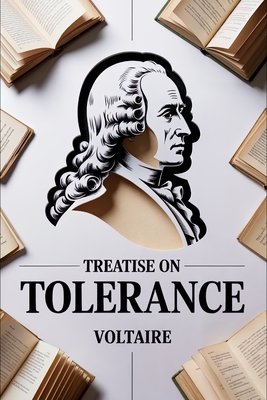
Treatise on Tolerance: New Translation
| AUTHOR | Dufis, Aurland; Voltaire |
| PUBLISHER | Independently Published (07/28/2025) |
| PRODUCT TYPE | Paperback (Paperback) |
Voltaire's Treatise on Tolerance stands as one of the Enlightenment's most powerful pleas for religious freedom and intellectual humility. Written in 1763, this passionate work emerged from one of the most notorious miscarriages of justice in eighteenth-century France: the execution of Jean Calas, a Protestant merchant from Toulouse who was tortured and killed on the false accusation that he had murdered his son to prevent the young man's conversion to Catholicism.
The Calas affair became Voltaire's rallying cry against what he saw as the dangerous fanaticism of his age. Through meticulous investigation and relentless advocacy, he not only helped posthumously clear Calas's name but used the case as a lens through which to examine the broader problem of religious intolerance. The Treatise is both a specific response to this injustice and a universal argument for the principles of tolerance that Voltaire believed essential to civilized society.
At its heart, the work rests on a foundation of philosophical humility. Voltaire argues that human reason, while precious, is inherently limited and fallible. Since we cannot achieve absolute certainty about religious truth, we have no right to persecute others for their beliefs. This skeptical approach doesn't lead him to atheism-he remained a deist throughout his life-but rather to the conclusion that dogmatic certainty is both intellectually dishonest and socially dangerous.
The Treatise is remarkable for its practical as well as philosophical arguments. Voltaire demonstrates through historical examples how tolerance has led to prosperity and peace, while intolerance has bred violence, economic decline, and social chaos. He points to countries like Holland and England, where religious diversity coexisted with commercial success, contrasting them with the devastation wrought by religious wars. His argument is not merely that tolerance is morally right, but that it works-that societies flourish when they embrace religious diversity rather than suppress it.
Throughout the work, Voltaire's characteristic wit and irony serve his serious purpose. He employs satire to expose the absurdities of fanaticism while maintaining a tone of reasoned discourse that makes his arguments all the more compelling. The Treatise remains a masterpiece of Enlightenment rhetoric, combining emotional appeal with rational argument, specific historical analysis with universal principles, and moral outrage with intellectual sophistication.
Voltaire's Treatise on Tolerance stands as one of the Enlightenment's most powerful pleas for religious freedom and intellectual humility. Written in 1763, this passionate work emerged from one of the most notorious miscarriages of justice in eighteenth-century France: the execution of Jean Calas, a Protestant merchant from Toulouse who was tortured and killed on the false accusation that he had murdered his son to prevent the young man's conversion to Catholicism.
The Calas affair became Voltaire's rallying cry against what he saw as the dangerous fanaticism of his age. Through meticulous investigation and relentless advocacy, he not only helped posthumously clear Calas's name but used the case as a lens through which to examine the broader problem of religious intolerance. The Treatise is both a specific response to this injustice and a universal argument for the principles of tolerance that Voltaire believed essential to civilized society.
At its heart, the work rests on a foundation of philosophical humility. Voltaire argues that human reason, while precious, is inherently limited and fallible. Since we cannot achieve absolute certainty about religious truth, we have no right to persecute others for their beliefs. This skeptical approach doesn't lead him to atheism-he remained a deist throughout his life-but rather to the conclusion that dogmatic certainty is both intellectually dishonest and socially dangerous.
The Treatise is remarkable for its practical as well as philosophical arguments. Voltaire demonstrates through historical examples how tolerance has led to prosperity and peace, while intolerance has bred violence, economic decline, and social chaos. He points to countries like Holland and England, where religious diversity coexisted with commercial success, contrasting them with the devastation wrought by religious wars. His argument is not merely that tolerance is morally right, but that it works-that societies flourish when they embrace religious diversity rather than suppress it.
Throughout the work, Voltaire's characteristic wit and irony serve his serious purpose. He employs satire to expose the absurdities of fanaticism while maintaining a tone of reasoned discourse that makes his arguments all the more compelling. The Treatise remains a masterpiece of Enlightenment rhetoric, combining emotional appeal with rational argument, specific historical analysis with universal principles, and moral outrage with intellectual sophistication.