
ISBN 9798294995638 is currently unpriced. Please contact us for pricing.
Available options are listed below:
Available options are listed below:
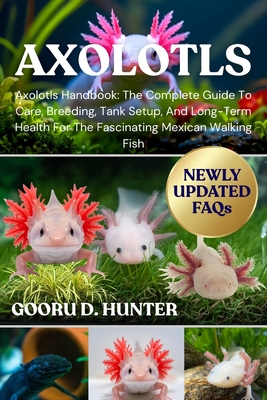
Axolotls: Axolotls Handbook: The Complete Guide To Care, Breeding, Tank Setup, And Long-Term Health For The Fascinating Mexican Walking Fish
| AUTHOR | Hunter, Gooru D. |
| PUBLISHER | Independently Published (07/31/2025) |
| PRODUCT TYPE | Paperback (Paperback) |
Description
Discovering the fascinating world of the Mexican walking fish origins, popularity, and what makes them unique
The axolotl (pronounced ACK-suh-lot-ul), scientifically known as Ambystoma mexicanum, is one of the most captivating and biologically remarkable amphibians known to science and pet enthusiasts alike. Often dubbed the "Mexican walking fish," despite not being a fish at all, this aquatic creature has enchanted biologists, pet keepers, and educators around the world due to its permanent larval features, unique regenerative abilities, and quirky appearance.
In this introductory chapter, we'll explore the fascinating origins of the axolotl, its rise in popularity both as a scientific model and a pet, and what truly sets this amphibian apart from the rest of the animal kingdom.
The Origins of the Axolotl
The axolotl is native to a very specific and now critically endangered set of freshwater lakes and canals in Mexico, primarily Lake Xochimilco in the Valley of Mexico, near Mexico City. Historically, it also inhabited Lake Chalco, which has since been drained to prevent flooding. These lakes formed part of a high-altitude system of water bodies surrounded by volcanoes, offering a unique and stable aquatic environment.
The name "axolotl" comes from the Nahuatl language spoken by the Aztecs. There are two common translations - one is "water monster," and the other refers to "water dog." Both reflect the mythical and mysterious nature of this animal in ancient Mesoamerican cultures. The axolotl was both a food source and a spiritual symbol for the Aztecs, tied to legends of the god Xolotl, who is said to have transformed into the creature to avoid sacrifice.
Unlike many amphibians that undergo metamorphosis - changing from aquatic larvae into terrestrial adults - the axolotl famously does not. It retains juvenile characteristics into adulthood, including external gills and a fully aquatic lifestyle, a phenomenon known as neoteny. This biological trait has helped axolotls remain perfectly adapted to their specific aquatic habitat but has also contributed to their vulnerability in the wild.
Neoteny: The Forever Larva
What makes the axolotl particularly fascinating is its neotenic state. While most amphibians, including salamanders, develop lungs and adapt to life on land, the axolotl spends its entire life underwater, breathing through both lungs and large, frilly gills that extend from either side of its head. These gills are not only functional but also visually distinctive - pink or red depending on blood flow, and feather-like in appearance.
In rare cases, axolotls can undergo metamorphosis when exposed to certain hormonal triggers or environmental stressors, transforming into terrestrial salamanders. However, this is extremely uncommon in captivity and is generally considered dangerous to the animal's health. Most axolotls will remain aquatic and gilled for life, making them a unique case among amphibians.
Neoteny is not just a quirky trait - it's a critical part of what makes axolotls so valuable in scientific research. Their ability to retain embryonic traits has opened up new ways of studying development, regeneration, and genetic control.
A Marvel of Regeneration
Perhaps even more astonishing than its neotenic nature is the axolotl's regenerative ability. While many animals can regenerate tissues to a limited extent, the axolotl is capable of regenerating entire limbs, sections of its spinal cord, parts of its heart, and even portions of its brain. And it does this without scarring.
This regenerative prowess has made the axolotl a superstar in scientific research, especially in the fields of regenerative medicine, developmental biology, and genetics. Researchers study axolotls to better understand how tissues can reform, how scar-free healing occurs, and what cellular and molecular pathways are involved.
The axolotl (pronounced ACK-suh-lot-ul), scientifically known as Ambystoma mexicanum, is one of the most captivating and biologically remarkable amphibians known to science and pet enthusiasts alike. Often dubbed the "Mexican walking fish," despite not being a fish at all, this aquatic creature has enchanted biologists, pet keepers, and educators around the world due to its permanent larval features, unique regenerative abilities, and quirky appearance.
In this introductory chapter, we'll explore the fascinating origins of the axolotl, its rise in popularity both as a scientific model and a pet, and what truly sets this amphibian apart from the rest of the animal kingdom.
The Origins of the Axolotl
The axolotl is native to a very specific and now critically endangered set of freshwater lakes and canals in Mexico, primarily Lake Xochimilco in the Valley of Mexico, near Mexico City. Historically, it also inhabited Lake Chalco, which has since been drained to prevent flooding. These lakes formed part of a high-altitude system of water bodies surrounded by volcanoes, offering a unique and stable aquatic environment.
The name "axolotl" comes from the Nahuatl language spoken by the Aztecs. There are two common translations - one is "water monster," and the other refers to "water dog." Both reflect the mythical and mysterious nature of this animal in ancient Mesoamerican cultures. The axolotl was both a food source and a spiritual symbol for the Aztecs, tied to legends of the god Xolotl, who is said to have transformed into the creature to avoid sacrifice.
Unlike many amphibians that undergo metamorphosis - changing from aquatic larvae into terrestrial adults - the axolotl famously does not. It retains juvenile characteristics into adulthood, including external gills and a fully aquatic lifestyle, a phenomenon known as neoteny. This biological trait has helped axolotls remain perfectly adapted to their specific aquatic habitat but has also contributed to their vulnerability in the wild.
Neoteny: The Forever Larva
What makes the axolotl particularly fascinating is its neotenic state. While most amphibians, including salamanders, develop lungs and adapt to life on land, the axolotl spends its entire life underwater, breathing through both lungs and large, frilly gills that extend from either side of its head. These gills are not only functional but also visually distinctive - pink or red depending on blood flow, and feather-like in appearance.
In rare cases, axolotls can undergo metamorphosis when exposed to certain hormonal triggers or environmental stressors, transforming into terrestrial salamanders. However, this is extremely uncommon in captivity and is generally considered dangerous to the animal's health. Most axolotls will remain aquatic and gilled for life, making them a unique case among amphibians.
Neoteny is not just a quirky trait - it's a critical part of what makes axolotls so valuable in scientific research. Their ability to retain embryonic traits has opened up new ways of studying development, regeneration, and genetic control.
A Marvel of Regeneration
Perhaps even more astonishing than its neotenic nature is the axolotl's regenerative ability. While many animals can regenerate tissues to a limited extent, the axolotl is capable of regenerating entire limbs, sections of its spinal cord, parts of its heart, and even portions of its brain. And it does this without scarring.
This regenerative prowess has made the axolotl a superstar in scientific research, especially in the fields of regenerative medicine, developmental biology, and genetics. Researchers study axolotls to better understand how tissues can reform, how scar-free healing occurs, and what cellular and molecular pathways are involved.
Show More
Product Format
Product Details
ISBN-13:
9798294995638
Binding:
Paperback or Softback (Trade Paperback (Us))
Content Language:
English
More Product Details
Page Count:
148
Carton Quantity:
52
Product Dimensions:
6.00 x 0.32 x 9.00 inches
Weight:
0.46 pound(s)
Country of Origin:
US
Subject Information
BISAC Categories
Science | Life Sciences - Zoology - Ichthyology & Herpetology
Descriptions, Reviews, Etc.
publisher marketing
Discovering the fascinating world of the Mexican walking fish origins, popularity, and what makes them unique
The axolotl (pronounced ACK-suh-lot-ul), scientifically known as Ambystoma mexicanum, is one of the most captivating and biologically remarkable amphibians known to science and pet enthusiasts alike. Often dubbed the "Mexican walking fish," despite not being a fish at all, this aquatic creature has enchanted biologists, pet keepers, and educators around the world due to its permanent larval features, unique regenerative abilities, and quirky appearance.
In this introductory chapter, we'll explore the fascinating origins of the axolotl, its rise in popularity both as a scientific model and a pet, and what truly sets this amphibian apart from the rest of the animal kingdom.
The Origins of the Axolotl
The axolotl is native to a very specific and now critically endangered set of freshwater lakes and canals in Mexico, primarily Lake Xochimilco in the Valley of Mexico, near Mexico City. Historically, it also inhabited Lake Chalco, which has since been drained to prevent flooding. These lakes formed part of a high-altitude system of water bodies surrounded by volcanoes, offering a unique and stable aquatic environment.
The name "axolotl" comes from the Nahuatl language spoken by the Aztecs. There are two common translations - one is "water monster," and the other refers to "water dog." Both reflect the mythical and mysterious nature of this animal in ancient Mesoamerican cultures. The axolotl was both a food source and a spiritual symbol for the Aztecs, tied to legends of the god Xolotl, who is said to have transformed into the creature to avoid sacrifice.
Unlike many amphibians that undergo metamorphosis - changing from aquatic larvae into terrestrial adults - the axolotl famously does not. It retains juvenile characteristics into adulthood, including external gills and a fully aquatic lifestyle, a phenomenon known as neoteny. This biological trait has helped axolotls remain perfectly adapted to their specific aquatic habitat but has also contributed to their vulnerability in the wild.
Neoteny: The Forever Larva
What makes the axolotl particularly fascinating is its neotenic state. While most amphibians, including salamanders, develop lungs and adapt to life on land, the axolotl spends its entire life underwater, breathing through both lungs and large, frilly gills that extend from either side of its head. These gills are not only functional but also visually distinctive - pink or red depending on blood flow, and feather-like in appearance.
In rare cases, axolotls can undergo metamorphosis when exposed to certain hormonal triggers or environmental stressors, transforming into terrestrial salamanders. However, this is extremely uncommon in captivity and is generally considered dangerous to the animal's health. Most axolotls will remain aquatic and gilled for life, making them a unique case among amphibians.
Neoteny is not just a quirky trait - it's a critical part of what makes axolotls so valuable in scientific research. Their ability to retain embryonic traits has opened up new ways of studying development, regeneration, and genetic control.
A Marvel of Regeneration
Perhaps even more astonishing than its neotenic nature is the axolotl's regenerative ability. While many animals can regenerate tissues to a limited extent, the axolotl is capable of regenerating entire limbs, sections of its spinal cord, parts of its heart, and even portions of its brain. And it does this without scarring.
This regenerative prowess has made the axolotl a superstar in scientific research, especially in the fields of regenerative medicine, developmental biology, and genetics. Researchers study axolotls to better understand how tissues can reform, how scar-free healing occurs, and what cellular and molecular pathways are involved.
The axolotl (pronounced ACK-suh-lot-ul), scientifically known as Ambystoma mexicanum, is one of the most captivating and biologically remarkable amphibians known to science and pet enthusiasts alike. Often dubbed the "Mexican walking fish," despite not being a fish at all, this aquatic creature has enchanted biologists, pet keepers, and educators around the world due to its permanent larval features, unique regenerative abilities, and quirky appearance.
In this introductory chapter, we'll explore the fascinating origins of the axolotl, its rise in popularity both as a scientific model and a pet, and what truly sets this amphibian apart from the rest of the animal kingdom.
The Origins of the Axolotl
The axolotl is native to a very specific and now critically endangered set of freshwater lakes and canals in Mexico, primarily Lake Xochimilco in the Valley of Mexico, near Mexico City. Historically, it also inhabited Lake Chalco, which has since been drained to prevent flooding. These lakes formed part of a high-altitude system of water bodies surrounded by volcanoes, offering a unique and stable aquatic environment.
The name "axolotl" comes from the Nahuatl language spoken by the Aztecs. There are two common translations - one is "water monster," and the other refers to "water dog." Both reflect the mythical and mysterious nature of this animal in ancient Mesoamerican cultures. The axolotl was both a food source and a spiritual symbol for the Aztecs, tied to legends of the god Xolotl, who is said to have transformed into the creature to avoid sacrifice.
Unlike many amphibians that undergo metamorphosis - changing from aquatic larvae into terrestrial adults - the axolotl famously does not. It retains juvenile characteristics into adulthood, including external gills and a fully aquatic lifestyle, a phenomenon known as neoteny. This biological trait has helped axolotls remain perfectly adapted to their specific aquatic habitat but has also contributed to their vulnerability in the wild.
Neoteny: The Forever Larva
What makes the axolotl particularly fascinating is its neotenic state. While most amphibians, including salamanders, develop lungs and adapt to life on land, the axolotl spends its entire life underwater, breathing through both lungs and large, frilly gills that extend from either side of its head. These gills are not only functional but also visually distinctive - pink or red depending on blood flow, and feather-like in appearance.
In rare cases, axolotls can undergo metamorphosis when exposed to certain hormonal triggers or environmental stressors, transforming into terrestrial salamanders. However, this is extremely uncommon in captivity and is generally considered dangerous to the animal's health. Most axolotls will remain aquatic and gilled for life, making them a unique case among amphibians.
Neoteny is not just a quirky trait - it's a critical part of what makes axolotls so valuable in scientific research. Their ability to retain embryonic traits has opened up new ways of studying development, regeneration, and genetic control.
A Marvel of Regeneration
Perhaps even more astonishing than its neotenic nature is the axolotl's regenerative ability. While many animals can regenerate tissues to a limited extent, the axolotl is capable of regenerating entire limbs, sections of its spinal cord, parts of its heart, and even portions of its brain. And it does this without scarring.
This regenerative prowess has made the axolotl a superstar in scientific research, especially in the fields of regenerative medicine, developmental biology, and genetics. Researchers study axolotls to better understand how tissues can reform, how scar-free healing occurs, and what cellular and molecular pathways are involved.
Show More