
Available options are listed below:
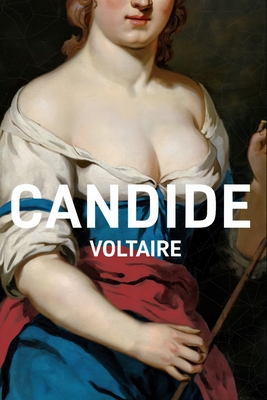
Candide: A New Translation
| AUTHOR | Ferousse, Liam; Voltaire |
| PUBLISHER | Independently Published (02/20/2025) |
| PRODUCT TYPE | Paperback (Paperback) |
Voltaire's Candide, first published in 1759, is one of the most influential and enduring works of satire in Western literature. Written during the Enlightenment, the novella presents a sharp critique of philosophical optimism, religious hypocrisy, and the cruelty of human society, all wrapped in a fast-paced and darkly humorous adventure. Through its witty and often absurd narrative, Candide remains as relevant today as it was in the 18th century, offering a timeless exploration of human folly, resilience, and the search for meaning.
The story follows Candide, a naïve young man raised in the idyllic castle of Baron Thunder-ten-Tronckh, where he is taught by his mentor, Pangloss, that they live in "the best of all possible worlds." However, Candide's worldview is shattered when he is abruptly expelled from his home and embarks on a chaotic journey across Europe and the Americas, encountering war, natural disasters, corruption, and endless misfortunes. Along the way, he reunites with and loses the love of his life, Cunegonde, while gradually coming to question the optimism instilled in him.
Candide was written in response to the prevailing philosophy of the time, particularly the ideas of Gottfried Wilhelm Leibniz, who argued that everything in the universe was ultimately for the best. Voltaire, appalled by the suffering caused by war, natural disasters, and religious persecution, used the novella to expose the absurdity of blind optimism and the dangers of complacency. The novel's blend of humor, adventure, and philosophical debate makes it both entertaining and intellectually stimulating.
This new translation preserves the sharp wit and lively energy of Voltaire's original prose, ensuring that modern readers can fully appreciate its humor, irony, and biting social critique. Whether read as a satire, a philosophical inquiry, or simply an entertaining adventure, Candide continues to challenge and amuse readers with its irreverent and thought-provoking take on the human condition.
Voltaire's Candide, first published in 1759, is one of the most influential and enduring works of satire in Western literature. Written during the Enlightenment, the novella presents a sharp critique of philosophical optimism, religious hypocrisy, and the cruelty of human society, all wrapped in a fast-paced and darkly humorous adventure. Through its witty and often absurd narrative, Candide remains as relevant today as it was in the 18th century, offering a timeless exploration of human folly, resilience, and the search for meaning.
The story follows Candide, a naïve young man raised in the idyllic castle of Baron Thunder-ten-Tronckh, where he is taught by his mentor, Pangloss, that they live in "the best of all possible worlds." However, Candide's worldview is shattered when he is abruptly expelled from his home and embarks on a chaotic journey across Europe and the Americas, encountering war, natural disasters, corruption, and endless misfortunes. Along the way, he reunites with and loses the love of his life, Cunegonde, while gradually coming to question the optimism instilled in him.
Candide was written in response to the prevailing philosophy of the time, particularly the ideas of Gottfried Wilhelm Leibniz, who argued that everything in the universe was ultimately for the best. Voltaire, appalled by the suffering caused by war, natural disasters, and religious persecution, used the novella to expose the absurdity of blind optimism and the dangers of complacency. The novel's blend of humor, adventure, and philosophical debate makes it both entertaining and intellectually stimulating.
This new translation preserves the sharp wit and lively energy of Voltaire's original prose, ensuring that modern readers can fully appreciate its humor, irony, and biting social critique. Whether read as a satire, a philosophical inquiry, or simply an entertaining adventure, Candide continues to challenge and amuse readers with its irreverent and thought-provoking take on the human condition.