
ISBN 9798315580737 is currently unpriced. Please contact us for pricing.
Available options are listed below:
Available options are listed below:
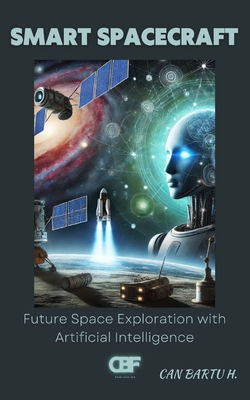
Smart Spacecraft: Future Space Exploration with Artificial Intelligence
| AUTHOR | H, Can Bartu |
| PUBLISHER | Independently Published (03/26/2025) |
| PRODUCT TYPE | Paperback (Paperback) |
Description
Artificial intelligence is transforming humanity's approach to space exploration, unlocking new possibilities for autonomous decision-making, data analysis, and advanced problem-solving. From the automation of spacecraft to the integration of machine learning in real-time operations, these technologies are redefining how we navigate and understand the cosmos. The interplay between human ingenuity and machine precision has become a cornerstone of interstellar exploration, allowing for unprecedented efficiency and accuracy in mission design and execution.
At the heart of this transformation are smart systems and autonomous spacecraft that can adapt to the unpredictable nature of space. Equipped with advanced sensors, self-managing navigation systems, and deep learning algorithms, these systems enable the exploration of distant planets, asteroids, and comets. Robotic systems, such as those deployed on Mars, and cooperative interactions between humans and machines are paving the way for sustained exploration and colonization efforts.
Artificial intelligence is also revolutionizing astronomical observations, with algorithms capable of processing vast amounts of data from space telescopes and mapping the universe with unmatched precision. These intelligent systems not only enhance our understanding of the cosmos but also support deep space navigation, resource management, and the development of sustainable ecosystems for future colonies.
As humanity ventures further into space, artificial intelligence is also critical for ensuring security and mitigating risks. From managing space traffic to preventing collisions and detecting threats, intelligent systems are essential for maintaining the safety of interstellar operations. Looking ahead, the integration of AI into interplanetary and interstellar projects promises to extend humanity's reach into the universe, blending innovation and exploration to create a future filled with endless possibilities.
At the heart of this transformation are smart systems and autonomous spacecraft that can adapt to the unpredictable nature of space. Equipped with advanced sensors, self-managing navigation systems, and deep learning algorithms, these systems enable the exploration of distant planets, asteroids, and comets. Robotic systems, such as those deployed on Mars, and cooperative interactions between humans and machines are paving the way for sustained exploration and colonization efforts.
Artificial intelligence is also revolutionizing astronomical observations, with algorithms capable of processing vast amounts of data from space telescopes and mapping the universe with unmatched precision. These intelligent systems not only enhance our understanding of the cosmos but also support deep space navigation, resource management, and the development of sustainable ecosystems for future colonies.
As humanity ventures further into space, artificial intelligence is also critical for ensuring security and mitigating risks. From managing space traffic to preventing collisions and detecting threats, intelligent systems are essential for maintaining the safety of interstellar operations. Looking ahead, the integration of AI into interplanetary and interstellar projects promises to extend humanity's reach into the universe, blending innovation and exploration to create a future filled with endless possibilities.
Show More
Product Format
Product Details
ISBN-13:
9798315580737
Binding:
Paperback or Softback (Trade Paperback (Us))
Content Language:
English
More Product Details
Page Count:
168
Carton Quantity:
46
Product Dimensions:
5.00 x 0.36 x 8.00 inches
Weight:
0.38 pound(s)
Country of Origin:
US
Subject Information
BISAC Categories
Science | Space Science - Astronomy
Descriptions, Reviews, Etc.
publisher marketing
Artificial intelligence is transforming humanity's approach to space exploration, unlocking new possibilities for autonomous decision-making, data analysis, and advanced problem-solving. From the automation of spacecraft to the integration of machine learning in real-time operations, these technologies are redefining how we navigate and understand the cosmos. The interplay between human ingenuity and machine precision has become a cornerstone of interstellar exploration, allowing for unprecedented efficiency and accuracy in mission design and execution.
At the heart of this transformation are smart systems and autonomous spacecraft that can adapt to the unpredictable nature of space. Equipped with advanced sensors, self-managing navigation systems, and deep learning algorithms, these systems enable the exploration of distant planets, asteroids, and comets. Robotic systems, such as those deployed on Mars, and cooperative interactions between humans and machines are paving the way for sustained exploration and colonization efforts.
Artificial intelligence is also revolutionizing astronomical observations, with algorithms capable of processing vast amounts of data from space telescopes and mapping the universe with unmatched precision. These intelligent systems not only enhance our understanding of the cosmos but also support deep space navigation, resource management, and the development of sustainable ecosystems for future colonies.
As humanity ventures further into space, artificial intelligence is also critical for ensuring security and mitigating risks. From managing space traffic to preventing collisions and detecting threats, intelligent systems are essential for maintaining the safety of interstellar operations. Looking ahead, the integration of AI into interplanetary and interstellar projects promises to extend humanity's reach into the universe, blending innovation and exploration to create a future filled with endless possibilities.
At the heart of this transformation are smart systems and autonomous spacecraft that can adapt to the unpredictable nature of space. Equipped with advanced sensors, self-managing navigation systems, and deep learning algorithms, these systems enable the exploration of distant planets, asteroids, and comets. Robotic systems, such as those deployed on Mars, and cooperative interactions between humans and machines are paving the way for sustained exploration and colonization efforts.
Artificial intelligence is also revolutionizing astronomical observations, with algorithms capable of processing vast amounts of data from space telescopes and mapping the universe with unmatched precision. These intelligent systems not only enhance our understanding of the cosmos but also support deep space navigation, resource management, and the development of sustainable ecosystems for future colonies.
As humanity ventures further into space, artificial intelligence is also critical for ensuring security and mitigating risks. From managing space traffic to preventing collisions and detecting threats, intelligent systems are essential for maintaining the safety of interstellar operations. Looking ahead, the integration of AI into interplanetary and interstellar projects promises to extend humanity's reach into the universe, blending innovation and exploration to create a future filled with endless possibilities.
Show More