
ISBN 9798321156698 is currently unpriced. Please contact us for pricing.
Available options are listed below:
Available options are listed below:
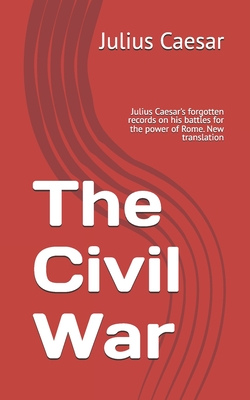
The Civil War: Julius Caesar's forgotten records on his battles for the power of Rome. New translation
| AUTHOR | Massardo, Marcello; Caesar, Julius |
| PUBLISHER | Independently Published (08/20/2024) |
| PRODUCT TYPE | Paperback (Paperback) |
Description
Commentarii de Bello Civili, also known as "Commentaries on the Civil War" or simply "Civil Wars", is a captivating historical account penned by the illustrious Roman general and statesman, Julius Caesar. Let me immerse you in the grandeur of this literary work:
- The Prelude:
- Picture the year 49 BCE, a time of political turmoil and seismic shifts in the Roman Republic. The stage is set for an epic clash between two titans: Caesar and Pompey.
- Caesar, fresh from his conquest of Gaul (modern-day France and Belgium), stands at the pinnacle of power. His wealth, military prowess, and political influence rival the gods themselves.
- Pompey, once Caesar's ally in the First Triumvirate, now stands as his adversary. The death of their mutual friend, Crassus, and Pompey's marriage to an anti-Caesar faction further fuel the flames of discord.
- The Conflict Unfolds:
- Book I: The tension escalates. Caesar, with his legions, crosses the Rubicon River, defying the Senate's authority. The die is cast, and the civil war erupts.
- Book II: The battles rage across Italy. Pompey, the Senate, and their forces clash with Caesar's legions. The stakes are nothing less than the fate of Rome itself.
- Book III: The decisive Battle of Pharsalus unfolds. Pompey's defeat sends him fleeing to Egypt, where treachery awaits. The drama reaches its zenith.
- Caesar's Penmanship:
- In elegant Classical Latin, Caesar weaves a tapestry of war, strategy, and human frailty. His prose dances between the factual and the poetic, capturing the essence of conflict.
- His firsthand account immerses us in the heat of battle, the shifting allegiances, and the personal sacrifices. We witness the clash of ideologies-republicanism versus autocracy-through his eyes.
- Themes and Motivations:
- Ambition: Caesar's ambition knows no bounds. His desire for power, glory, and legacy propels him forward, even as the Senate brands him a traitor.
- Human Frailty: Beneath the armor, both Caesar and Pompey grapple with their humanity. Fear, loyalty, and pride shape their decisions.
- The Price of Victory: Triumph comes at a cost. Caesar's victories stain the earth with blood, and the Republic teeters on the precipice.
- Legacy and Influence:
- Caesar's Commentarii de Bello Civili stands as a testament to his genius. It echoes through the annals of history, inspiring leaders, scholars, and dreamers.
- Its brevity-just three books-belies its impact. It complements his earlier work, the Commentarii de Bello Gallico, which chronicled his Gallic campaigns.
- The Enduring Echo:
- As you read, imagine the scent of olive groves, the clash of swords, and the weight of empire. Feel the pulse of Rome, torn between loyalty and rebellion.
- Caesar's words resonate across centuries, reminding us that behind every war lies a human story-a tale of ambition, sacrifice, and the inexorable march of history.
Show More
Product Format
Product Details
ISBN-13:
9798321156698
Binding:
Paperback or Softback (Trade Paperback (Us))
Content Language:
English
More Product Details
Page Count:
84
Carton Quantity:
84
Product Dimensions:
5.00 x 0.20 x 8.00 inches
Weight:
0.22 pound(s)
Country of Origin:
US
Subject Information
BISAC Categories
Biography & Autobiography | Memoirs
Descriptions, Reviews, Etc.
publisher marketing
Commentarii de Bello Civili, also known as "Commentaries on the Civil War" or simply "Civil Wars", is a captivating historical account penned by the illustrious Roman general and statesman, Julius Caesar. Let me immerse you in the grandeur of this literary work:
- The Prelude:
- Picture the year 49 BCE, a time of political turmoil and seismic shifts in the Roman Republic. The stage is set for an epic clash between two titans: Caesar and Pompey.
- Caesar, fresh from his conquest of Gaul (modern-day France and Belgium), stands at the pinnacle of power. His wealth, military prowess, and political influence rival the gods themselves.
- Pompey, once Caesar's ally in the First Triumvirate, now stands as his adversary. The death of their mutual friend, Crassus, and Pompey's marriage to an anti-Caesar faction further fuel the flames of discord.
- The Conflict Unfolds:
- Book I: The tension escalates. Caesar, with his legions, crosses the Rubicon River, defying the Senate's authority. The die is cast, and the civil war erupts.
- Book II: The battles rage across Italy. Pompey, the Senate, and their forces clash with Caesar's legions. The stakes are nothing less than the fate of Rome itself.
- Book III: The decisive Battle of Pharsalus unfolds. Pompey's defeat sends him fleeing to Egypt, where treachery awaits. The drama reaches its zenith.
- Caesar's Penmanship:
- In elegant Classical Latin, Caesar weaves a tapestry of war, strategy, and human frailty. His prose dances between the factual and the poetic, capturing the essence of conflict.
- His firsthand account immerses us in the heat of battle, the shifting allegiances, and the personal sacrifices. We witness the clash of ideologies-republicanism versus autocracy-through his eyes.
- Themes and Motivations:
- Ambition: Caesar's ambition knows no bounds. His desire for power, glory, and legacy propels him forward, even as the Senate brands him a traitor.
- Human Frailty: Beneath the armor, both Caesar and Pompey grapple with their humanity. Fear, loyalty, and pride shape their decisions.
- The Price of Victory: Triumph comes at a cost. Caesar's victories stain the earth with blood, and the Republic teeters on the precipice.
- Legacy and Influence:
- Caesar's Commentarii de Bello Civili stands as a testament to his genius. It echoes through the annals of history, inspiring leaders, scholars, and dreamers.
- Its brevity-just three books-belies its impact. It complements his earlier work, the Commentarii de Bello Gallico, which chronicled his Gallic campaigns.
- The Enduring Echo:
- As you read, imagine the scent of olive groves, the clash of swords, and the weight of empire. Feel the pulse of Rome, torn between loyalty and rebellion.
- Caesar's words resonate across centuries, reminding us that behind every war lies a human story-a tale of ambition, sacrifice, and the inexorable march of history.
Show More