
Available options are listed below:
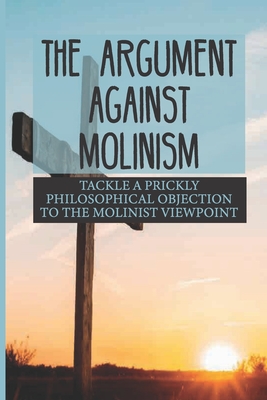
The Argument Against Molinism: Tackle A Prickly Philosophical Objection To The Molinist Viewpoint: Philosophical Objection To The Molinist
| AUTHOR | Hargest, Daron |
| PUBLISHER | Independently Published (07/01/2021) |
| PRODUCT TYPE | Paperback (Paperback) |
If you are Christian and need to learn about this "new religion" that is knocking on people's doors called Molinism, then this book is for you.
Through this book, you will explore:
Dean Zimmerman's divine voodoo worlds argument against Molinism purports to show that Molinism has the curious result of there being possible worlds where God has voodoo-like control over every creature's free choice; thus, these creatures are not free. Zimmerman finds that Molinism entails that it is only a contingent fact God can actualize free creatures. If this is so, then a new problem of counterfactual luck faces the Molinist. The author provides two independent responses to Zimmerman's argument, focusing on agent-causal theories and exploring intuitions from ethics. Then, the author even shows how this argument is relevant to people in the local church! He concludes Zimmerman's argument has not given sufficient grounds for thinking that Molinism fails to preserve libertarian freedom or entails a new problem of luck. Therefore, Molinists are free to use the teaching still.
If you are Christian and need to learn about this "new religion" that is knocking on people's doors called Molinism, then this book is for you.
Through this book, you will explore:
Dean Zimmerman's divine voodoo worlds argument against Molinism purports to show that Molinism has the curious result of there being possible worlds where God has voodoo-like control over every creature's free choice; thus, these creatures are not free. Zimmerman finds that Molinism entails that it is only a contingent fact God can actualize free creatures. If this is so, then a new problem of counterfactual luck faces the Molinist. The author provides two independent responses to Zimmerman's argument, focusing on agent-causal theories and exploring intuitions from ethics. Then, the author even shows how this argument is relevant to people in the local church! He concludes Zimmerman's argument has not given sufficient grounds for thinking that Molinism fails to preserve libertarian freedom or entails a new problem of luck. Therefore, Molinists are free to use the teaching still.