
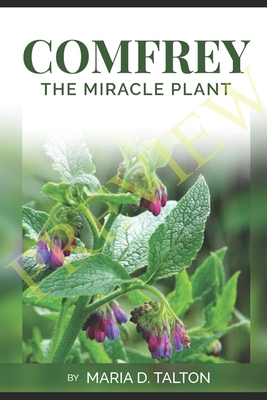
ISBN 9798643641452 is currently unpriced. Please contact us for pricing.
Available options are listed below:
Available options are listed below:
Comfrey: The Miracle Plant
| AUTHOR | Talton, Maria |
| PUBLISHER | Independently Published (05/05/2020) |
| PRODUCT TYPE | Paperback (Paperback) |
Description
**Comfrey: An Overview of Its Many Uses** Comfrey (Symphytum officinale) is a perennial herb renowned for its medicinal properties and versatility. With large, hairy leaves and bell-shaped flowers, this plant has been a staple in traditional medicine for centuries. **Medicinal Uses: ** 1. **Wound Healing: ** Comfrey contains allantoin, a compound that promotes cell regeneration, making it effective for healing minor wounds, cuts, and abrasions.
2. **Bone Fractures: ** Often referred to as "knitbone," comfrey helps accelerate the healing of fractures and sprains due to its regenerative properties.
3. **Inflammation Relief: ** Comfrey's anti-inflammatory properties make it useful for treating conditions like arthritis, muscle strains, and joint pain. It is commonly applied as a poultice or ointment.
4. **Skin Conditions: ** It is used to treat eczema, psoriasis, and other skin ailments due to its soothing and healing effects. **Agricultural Uses: ** 1. **Green Manure: ** Comfrey is an excellent green manure crop. Its deep roots draw nutrients from the soil, enriching it and enhancing fertility.
2. **Compost Activator: ** The leaves of comfrey decompose rapidly and are rich in nitrogen, making them a perfect addition to compost heaps to speed up decomposition.
3. **Fertilizer: ** Comfrey tea, made by soaking the leaves in water, is a potent liquid fertilizer that provides essential nutrients to plants. **Other Uses: ** 1. **Animal Feed: ** The high protein content of comfrey leaves makes them a nutritious supplement for livestock feed.
2. **Ornamental Plant: ** With its attractive foliage and flowers, comfrey can be used decoratively in gardens, providing aesthetic and ecological benefits. **Cautions: **
While comfrey has many beneficial uses, it contains pyrrolizidine alkaloids, which can be toxic to the liver if ingested in large quantities. Therefore, it is generally recommended for external use only and should be used with caution and guidance when taken internally. Comfrey's multifaceted applications make it a valuable plant for medicinal, agricultural, and ornamental purposes, underscoring its importance in both historical and contemporary contexts.
2. **Bone Fractures: ** Often referred to as "knitbone," comfrey helps accelerate the healing of fractures and sprains due to its regenerative properties.
3. **Inflammation Relief: ** Comfrey's anti-inflammatory properties make it useful for treating conditions like arthritis, muscle strains, and joint pain. It is commonly applied as a poultice or ointment.
4. **Skin Conditions: ** It is used to treat eczema, psoriasis, and other skin ailments due to its soothing and healing effects. **Agricultural Uses: ** 1. **Green Manure: ** Comfrey is an excellent green manure crop. Its deep roots draw nutrients from the soil, enriching it and enhancing fertility.
2. **Compost Activator: ** The leaves of comfrey decompose rapidly and are rich in nitrogen, making them a perfect addition to compost heaps to speed up decomposition.
3. **Fertilizer: ** Comfrey tea, made by soaking the leaves in water, is a potent liquid fertilizer that provides essential nutrients to plants. **Other Uses: ** 1. **Animal Feed: ** The high protein content of comfrey leaves makes them a nutritious supplement for livestock feed.
2. **Ornamental Plant: ** With its attractive foliage and flowers, comfrey can be used decoratively in gardens, providing aesthetic and ecological benefits. **Cautions: **
While comfrey has many beneficial uses, it contains pyrrolizidine alkaloids, which can be toxic to the liver if ingested in large quantities. Therefore, it is generally recommended for external use only and should be used with caution and guidance when taken internally. Comfrey's multifaceted applications make it a valuable plant for medicinal, agricultural, and ornamental purposes, underscoring its importance in both historical and contemporary contexts.
Show More
Product Format
Product Details
ISBN-13:
9798643641452
Binding:
Paperback or Softback (Trade Paperback (Us))
Content Language:
English
More Product Details
Page Count:
30
Carton Quantity:
236
Product Dimensions:
6.00 x 0.07 x 9.00 inches
Weight:
0.13 pound(s)
Country of Origin:
US
Subject Information
BISAC Categories
Health & Fitness | Alternative Therapies
Health & Fitness | Herbal Medications
Descriptions, Reviews, Etc.
publisher marketing
**Comfrey: An Overview of Its Many Uses** Comfrey (Symphytum officinale) is a perennial herb renowned for its medicinal properties and versatility. With large, hairy leaves and bell-shaped flowers, this plant has been a staple in traditional medicine for centuries. **Medicinal Uses: ** 1. **Wound Healing: ** Comfrey contains allantoin, a compound that promotes cell regeneration, making it effective for healing minor wounds, cuts, and abrasions.
2. **Bone Fractures: ** Often referred to as "knitbone," comfrey helps accelerate the healing of fractures and sprains due to its regenerative properties.
3. **Inflammation Relief: ** Comfrey's anti-inflammatory properties make it useful for treating conditions like arthritis, muscle strains, and joint pain. It is commonly applied as a poultice or ointment.
4. **Skin Conditions: ** It is used to treat eczema, psoriasis, and other skin ailments due to its soothing and healing effects. **Agricultural Uses: ** 1. **Green Manure: ** Comfrey is an excellent green manure crop. Its deep roots draw nutrients from the soil, enriching it and enhancing fertility.
2. **Compost Activator: ** The leaves of comfrey decompose rapidly and are rich in nitrogen, making them a perfect addition to compost heaps to speed up decomposition.
3. **Fertilizer: ** Comfrey tea, made by soaking the leaves in water, is a potent liquid fertilizer that provides essential nutrients to plants. **Other Uses: ** 1. **Animal Feed: ** The high protein content of comfrey leaves makes them a nutritious supplement for livestock feed.
2. **Ornamental Plant: ** With its attractive foliage and flowers, comfrey can be used decoratively in gardens, providing aesthetic and ecological benefits. **Cautions: **
While comfrey has many beneficial uses, it contains pyrrolizidine alkaloids, which can be toxic to the liver if ingested in large quantities. Therefore, it is generally recommended for external use only and should be used with caution and guidance when taken internally. Comfrey's multifaceted applications make it a valuable plant for medicinal, agricultural, and ornamental purposes, underscoring its importance in both historical and contemporary contexts.
2. **Bone Fractures: ** Often referred to as "knitbone," comfrey helps accelerate the healing of fractures and sprains due to its regenerative properties.
3. **Inflammation Relief: ** Comfrey's anti-inflammatory properties make it useful for treating conditions like arthritis, muscle strains, and joint pain. It is commonly applied as a poultice or ointment.
4. **Skin Conditions: ** It is used to treat eczema, psoriasis, and other skin ailments due to its soothing and healing effects. **Agricultural Uses: ** 1. **Green Manure: ** Comfrey is an excellent green manure crop. Its deep roots draw nutrients from the soil, enriching it and enhancing fertility.
2. **Compost Activator: ** The leaves of comfrey decompose rapidly and are rich in nitrogen, making them a perfect addition to compost heaps to speed up decomposition.
3. **Fertilizer: ** Comfrey tea, made by soaking the leaves in water, is a potent liquid fertilizer that provides essential nutrients to plants. **Other Uses: ** 1. **Animal Feed: ** The high protein content of comfrey leaves makes them a nutritious supplement for livestock feed.
2. **Ornamental Plant: ** With its attractive foliage and flowers, comfrey can be used decoratively in gardens, providing aesthetic and ecological benefits. **Cautions: **
While comfrey has many beneficial uses, it contains pyrrolizidine alkaloids, which can be toxic to the liver if ingested in large quantities. Therefore, it is generally recommended for external use only and should be used with caution and guidance when taken internally. Comfrey's multifaceted applications make it a valuable plant for medicinal, agricultural, and ornamental purposes, underscoring its importance in both historical and contemporary contexts.
Show More