
ISBN 9798675524259 is currently unpriced. Please contact us for pricing.
Available options are listed below:
Available options are listed below:
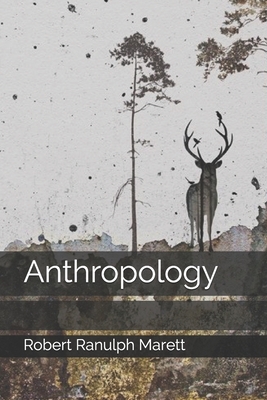
Anthropology
| AUTHOR | Ranulph Marett, Robert |
| PUBLISHER | Independently Published (09/01/2020) |
| PRODUCT TYPE | Paperback (Paperback) |
Description
Book Excerptis so much harder, to be candid about ourselves. Let us look at ourselves as if we were so many bees and ants, not forgetting, of course, to make use of the inside information that in the case of the insects we so conspicuously lack.This does not mean that human history, once constructed according to truth-regarding principles, should and could not be used for the practical advantage of mankind. The anthropologist, however, is not, as such, concerned with the practical employment to which his discoveries are put. At most, he may, on the strength of a conviction that truth is mighty and will prevail for human good, invite practical men to study his facts and generalizations in the hope that, by knowing mankind better, they may come to appreciate and serve it better. For instance, the administrator, who rules over savages, is almost invariably quite well-meaning, but not seldom utterly ignorant of native customs and beliefs. So, in many cases, is the missionary, another type of person in authority, who
Show More
Product Format
Product Details
ISBN-13:
9798675524259
Binding:
Paperback or Softback (Trade Paperback (Us))
Content Language:
English
More Product Details
Page Count:
154
Carton Quantity:
46
Product Dimensions:
5.98 x 0.36 x 9.02 inches
Weight:
0.52 pound(s)
Country of Origin:
US
Subject Information
BISAC Categories
Science | General
Descriptions, Reviews, Etc.
publisher marketing
Book Excerptis so much harder, to be candid about ourselves. Let us look at ourselves as if we were so many bees and ants, not forgetting, of course, to make use of the inside information that in the case of the insects we so conspicuously lack.This does not mean that human history, once constructed according to truth-regarding principles, should and could not be used for the practical advantage of mankind. The anthropologist, however, is not, as such, concerned with the practical employment to which his discoveries are put. At most, he may, on the strength of a conviction that truth is mighty and will prevail for human good, invite practical men to study his facts and generalizations in the hope that, by knowing mankind better, they may come to appreciate and serve it better. For instance, the administrator, who rules over savages, is almost invariably quite well-meaning, but not seldom utterly ignorant of native customs and beliefs. So, in many cases, is the missionary, another type of person in authority, who
Show More