
ISBN 9798686140424 is currently unpriced. Please contact us for pricing.
Available options are listed below:
Available options are listed below:
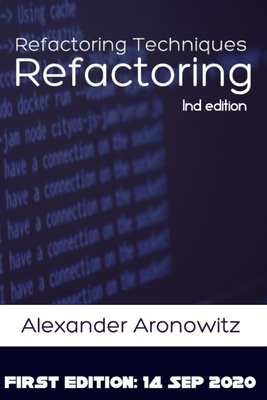
Refactoring: Refactoring Techniques
| AUTHOR | Aronowitz, Alexander |
| PUBLISHER | Independently Published (09/14/2020) |
| PRODUCT TYPE | Paperback (Paperback) |
Description
Refactoring is a controlled technique for improving the design of an existing code base. Its essence is applying a series of small behavior-preserving transformations, each of which "too small to be worth doing". However the cumulative effect of each of these transformations is quite significant. By doing them in small steps you reduce the risk of introducing errors. You also avoid having the system broken while you are carrying out the restructuring - which allows you to gradually refactor a system over an extended period of time.My book describes the process of refactoring and spends most of its time explaining how to do the various refactorings - the behavior preserving transformations. The book opens with a simple example that describes the whole process. There are then some introductory chapters that discuss broader issues around refactoring, the "code smells" that suggest refactoring, and the role of testing.The bulk of the book is around seventy refactorings described in detail: the motivation for doing them, mechanics of how to do them safely and a simple example.
Show More
Product Format
Product Details
ISBN-13:
9798686140424
Binding:
Paperback or Softback (Trade Paperback (Us))
Content Language:
English
More Product Details
Page Count:
84
Carton Quantity:
96
Product Dimensions:
5.98 x 0.17 x 9.02 inches
Weight:
0.27 pound(s)
Country of Origin:
US
Subject Information
BISAC Categories
Computers | Logic Design
Descriptions, Reviews, Etc.
publisher marketing
Refactoring is a controlled technique for improving the design of an existing code base. Its essence is applying a series of small behavior-preserving transformations, each of which "too small to be worth doing". However the cumulative effect of each of these transformations is quite significant. By doing them in small steps you reduce the risk of introducing errors. You also avoid having the system broken while you are carrying out the restructuring - which allows you to gradually refactor a system over an extended period of time.My book describes the process of refactoring and spends most of its time explaining how to do the various refactorings - the behavior preserving transformations. The book opens with a simple example that describes the whole process. There are then some introductory chapters that discuss broader issues around refactoring, the "code smells" that suggest refactoring, and the role of testing.The bulk of the book is around seventy refactorings described in detail: the motivation for doing them, mechanics of how to do them safely and a simple example.
Show More