
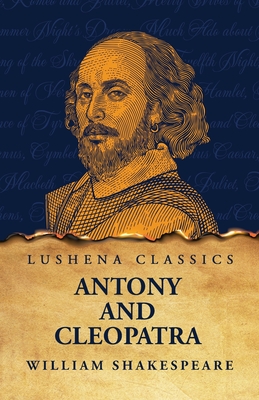
Antony and Cleopatra
| AUTHOR | Shakespeare, William |
| PUBLISHER | Lushena Books (12/26/2023) |
| PRODUCT TYPE | Paperback (Paperback) |
The authoritative edition of Antony and Cleopatra from The Folger Shakespeare Library, the trusted and widely used Shakespeare series for students and general readers.
Antony and Cleopatra dramatizes a major event in world history: the founding of the Roman Empire. The future first emperor, Octavius Caesar (later called Augustus Caesar), cold-bloodedly manipulates other characters and exercises iron control over himself.
At first, he shares power with Mark Antony, Rome's preeminent military leader, and the weaker Lepidus. Caesar needs Antony to fend off other Roman strongmen like Pompey; he even offers his sister Octavia to him as a bride, despite Antony's reputation as a libertine and his past rivalry with Caesar. Once Caesar defeats Pompey, however, he needs no allies. He brings charges against Lepidus, denies Antony his spoils from Pompey's defeat, and seizes cities in the eastern Roman colonies that Antony rules.
The play's emphasis, however, is on those whom Caesar defeats: Antony and his wealthy Egyptian ally, Queen Cleopatra. The play does not sugarcoat Antony and Cleopatra's famous love affair, including her calculated attempts to seduce Antony from his duties and his rage when he thinks she has betrayed him to Caesar. Nonetheless, the lovers find such sensual and emotional satisfaction that Caesar's world conquest seems smaller than what they find in each other.
The authoritative edition of Antony and Cleopatra from The Folger Shakespeare Library, the trusted and widely used Shakespeare series for students and general readers.
Antony and Cleopatra dramatizes a major event in world history: the founding of the Roman Empire. The future first emperor, Octavius Caesar (later called Augustus Caesar), cold-bloodedly manipulates other characters and exercises iron control over himself.
At first, he shares power with Mark Antony, Rome's preeminent military leader, and the weaker Lepidus. Caesar needs Antony to fend off other Roman strongmen like Pompey; he even offers his sister Octavia to him as a bride, despite Antony's reputation as a libertine and his past rivalry with Caesar. Once Caesar defeats Pompey, however, he needs no allies. He brings charges against Lepidus, denies Antony his spoils from Pompey's defeat, and seizes cities in the eastern Roman colonies that Antony rules.
The play's emphasis, however, is on those whom Caesar defeats: Antony and his wealthy Egyptian ally, Queen Cleopatra. The play does not sugarcoat Antony and Cleopatra's famous love affair, including her calculated attempts to seduce Antony from his duties and his rage when he thinks she has betrayed him to Caesar. Nonetheless, the lovers find such sensual and emotional satisfaction that Caesar's world conquest seems smaller than what they find in each other.
Like many of his contemporaries, including Christopher Marlowe, Shakespeare began his career on the stage, eventually rising to become part-owner of Lord Chamberlain s Men, a popular dramatic company of his day, and of the storied Globe Theatre in London.
Extremely popular in his lifetime, Shakespeare s works continue to resonate more than three hundred years after his death. His plays are performed more often than any other playwright s, have been translated into every major language in the world, and are studied widely by scholars and students.