
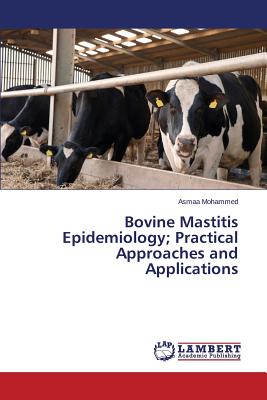
Bovine Mastitis Epidemiology; Practical Approaches and Applications
| AUTHOR | Mohammed Asmaa |
| PUBLISHER | LAP Lambert Academic Publishing (08/04/2014) |
| PRODUCT TYPE | Paperback (Paperback) |
Description
Mastitis continues to be the most economically important disease of dairy industry, accounting for about 38% of the total direct losses (Kossaibati and Esslemont 1997). Economic consequences of mastitis, clinical or sub-clinical, include reduced milk yield, poorer quality milk, increased culling rate and increased cost of veterinary services and medicine (Rahman et al., 2009).Epidemiological study was carried out to determine the prevalence and the potential risk factors associated with the occurrence of mastitis in dairy herds, identifying the bacterial causes of mastitis, conducting antimicrobial susceptibility test on bacterial isolates and finally to establish a new approach for prevention and control of disease in dairy herds to submit this program as a pilot model for milk producers and veterinarians in study area. prevention and control mastitis Program was concluded that dry cow therapy, hygienic milking procedure and post milking teat dipping have an important role in eliminating the existing and decrease new intra mammary infection from 17 ( 42.5%) to 5 (12.5%) and from 19 (47.5) to 9 (22.5) in both treated groups.
Show More
Product Format
Product Details
ISBN-13:
9783659570261
ISBN-10:
3659570265
Binding:
Paperback or Softback (Trade Paperback (Us))
Content Language:
English
More Product Details
Page Count:
172
Carton Quantity:
42
Product Dimensions:
6.00 x 0.40 x 9.00 inches
Weight:
0.57 pound(s)
Feature Codes:
Illustrated
Country of Origin:
US
Subject Information
BISAC Categories
Medical | Veterinary Medicine - General
Descriptions, Reviews, Etc.
publisher marketing
Mastitis continues to be the most economically important disease of dairy industry, accounting for about 38% of the total direct losses (Kossaibati and Esslemont 1997). Economic consequences of mastitis, clinical or sub-clinical, include reduced milk yield, poorer quality milk, increased culling rate and increased cost of veterinary services and medicine (Rahman et al., 2009).Epidemiological study was carried out to determine the prevalence and the potential risk factors associated with the occurrence of mastitis in dairy herds, identifying the bacterial causes of mastitis, conducting antimicrobial susceptibility test on bacterial isolates and finally to establish a new approach for prevention and control of disease in dairy herds to submit this program as a pilot model for milk producers and veterinarians in study area. prevention and control mastitis Program was concluded that dry cow therapy, hygienic milking procedure and post milking teat dipping have an important role in eliminating the existing and decrease new intra mammary infection from 17 ( 42.5%) to 5 (12.5%) and from 19 (47.5) to 9 (22.5) in both treated groups.
Show More
Your Price
$92.21