
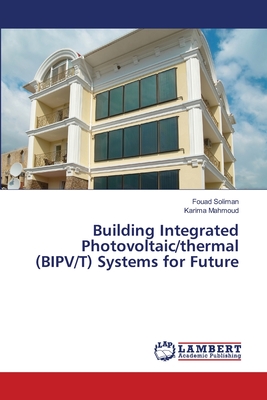
Building Integrated Photovoltaic/thermal (BIPV/T) Systems for Future
| AUTHOR | Mahmoud, Karima; Soliman, Fouad |
| PUBLISHER | LAP Lambert Academic Publishing (03/17/2025) |
| PRODUCT TYPE | Paperback (Paperback) |
Description
Photvoltaic applications for buildings began appearing in the 1970s. Aluminum-framed photovoltaic modules were connected to, or mounted on, buildings that were usually in remote areas without access to an electric power grid. In the 1980s photovoltaic module add-ons to roofs began being demonstrated. These PV systems were usually installed on utility-grid-connected buildings in areas with centralized power stations. In the 1990s BIPV construction products specially designed to be integrated into a building envelope became commercially available. A 1998 doctoral thesis by Patrina Eiffert, entitled An Economic Assessment of BIPV, hypothesized that one day there would an economic value for trading Renewable Energy. In passive solar building design, windows, walls, and floors are made to collect, store, reflect, and distribute solar energy, in the form of heat in the winter and reject solar heat in the summer. This is called passive solar design because, unlike active solar heating systems, it does not involve the use of mechanical and electrical devices. Photovoltaic-thermal hybrid solar systems (PVT) have been presented in a single unit.
Show More
Product Format
Product Details
ISBN-13:
9786208436629
ISBN-10:
6208436621
Binding:
Paperback or Softback (Trade Paperback (Us))
Content Language:
English
More Product Details
Page Count:
156
Carton Quantity:
46
Product Dimensions:
6.00 x 0.36 x 9.00 inches
Weight:
0.48 pound(s)
Country of Origin:
US
Subject Information
BISAC Categories
Technology & Engineering | Electrical
Descriptions, Reviews, Etc.
publisher marketing
Photvoltaic applications for buildings began appearing in the 1970s. Aluminum-framed photovoltaic modules were connected to, or mounted on, buildings that were usually in remote areas without access to an electric power grid. In the 1980s photovoltaic module add-ons to roofs began being demonstrated. These PV systems were usually installed on utility-grid-connected buildings in areas with centralized power stations. In the 1990s BIPV construction products specially designed to be integrated into a building envelope became commercially available. A 1998 doctoral thesis by Patrina Eiffert, entitled An Economic Assessment of BIPV, hypothesized that one day there would an economic value for trading Renewable Energy. In passive solar building design, windows, walls, and floors are made to collect, store, reflect, and distribute solar energy, in the form of heat in the winter and reject solar heat in the summer. This is called passive solar design because, unlike active solar heating systems, it does not involve the use of mechanical and electrical devices. Photovoltaic-thermal hybrid solar systems (PVT) have been presented in a single unit.
Show More
Your Price
$108.06