
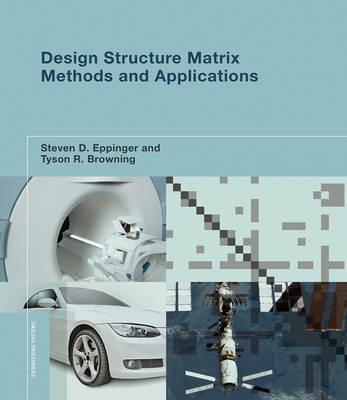
Design Structure Matrix Methods and Applications
| AUTHOR | Eppinger, Steven D.; Browning, Tyson R.; Moses, Joel et al. |
| PUBLISHER | MIT Press (02/12/2016) |
| PRODUCT TYPE | Paperback (Paperback) |
Design structure matrix (DSM) is a straightforward and flexible modeling technique that can be used for designing, developing, and managing complex systems. DSM offers network modeling tools that represent the elements of a system and their interactions, thereby highlighting the system's architecture (or designed structure). Its advantages include compact format, visual nature, intuitive representation, powerful analytical capacity, and flexibility. Used primarily so far in the area of engineering management, DSM is increasingly being applied to complex issues in health care management, financial systems, public policy, natural sciences, and social systems. This book offers a clear and concise explanation of DSM methods for practitioners and researchers.
Design structure matrix (DSM) is a straightforward and flexible modeling technique that can be used for designing, developing, and managing complex systems. DSM offers network modeling tools that represent the elements of a system and their interactions, thereby highlighting the system's architecture (or designed structure). Its advantages include compact format, visual nature, intuitive representation, powerful analytical capacity, and flexibility. Used primarily so far in the area of engineering management, DSM is increasingly being applied to complex issues in health care management, financial systems, public policy, natural sciences, and social systems. This book offers a clear and concise explanation of DSM methods for practitioners and researchers.