
Duplicate image at moonset
| AUTHOR | Geldart, Peter D.; Geldart, Peter |
| PUBLISHER | Petra Books (04/18/2025) |
| PRODUCT TYPE | Paperback (Paperback) |
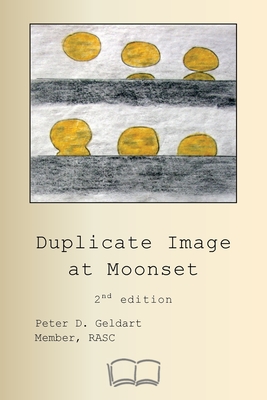
Observations were made over a great lake with a clear view to the horizon of moonsets that displayed a duplicate image below. This is known as an Etruscan Vase or an Omega effect because of the shape. The cause of the inferior image is considered: refraction, reflection, or gravitation.
"Since the phenomenon is only seen from a low vantage point looking over a level surface to a clear horizon it underscores the importance of the observer's position."
The cause of the inferior image observed on the horizon during Moon/Sun set/rise is examined. A refraction model suggests that light from the geometric moon beyond the horizon passes through air layers of different temperature and density to bend down to the observer. Yet this is inadequate in explaining the rising inferior image which is robust and not mirage-like. The author considers if refraction, reflection or gravitation play a role in its appearance.
Observations were made over a great lake with a clear view to the horizon of moonsets that displayed a duplicate image below. This is known as an Etruscan Vase or an Omega effect because of the shape. The cause of the inferior image is considered: refraction, reflection, or gravitation.
"Since the phenomenon is only seen from a low vantage point looking over a level surface to a clear horizon it underscores the importance of the observer's position."
The cause of the inferior image observed on the horizon during Moon/Sun set/rise is examined. A refraction model suggests that light from the geometric moon beyond the horizon passes through air layers of different temperature and density to bend down to the observer. Yet this is inadequate in explaining the rising inferior image which is robust and not mirage-like. The author considers if refraction, reflection or gravitation play a role in its appearance.