
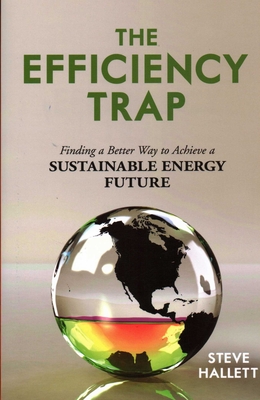
Efficiency Trap: Finding a Better Way to Achieve a Sustainable Energy Future
| AUTHOR | Hallett, Steve |
| PUBLISHER | Prometheus Books (04/23/2013) |
| PRODUCT TYPE | Paperback (Paperback) |
Description
One of the key tenets of the environmental movement is the need for greater efficiency in our use of dwindling natural resources, especially coal, natural gas, and oil. If our products are designed to be more energy efficient, so the thinking goes, our environmental impacts will be reduced and our fossil fuels will last longer. In this surprising new look at sustainability and conservation, environmentalist Steve Hallett argues that this thinking is fundamentally flawed. In fact, based on the example of coal use throughout the Industrial Revolution, more efficiency leads to more consumption, faster depletion of resources, and ultimately more stress on the planet. This is the efficiency trap. How do we avoid this trap? Hallett suggests that we focus on protecting natural resources, ecosystems, and social systems by making them more resilient. Knowing that we have reached limits to growth, we should work to decentralize energy-delivery services to give homes and communities some measure of independence. We can also build more sustainable food systems by diversifying the food-production landscape to address the vulnerabilities of the current supply chain. Efficiency does have its place in specific areas such as recycling and home insulation, but it will not work as a long-term approach to our energy dilemma. Yet recognizing the inevitable limits to our growth and the shortcomings of our current approach to addressing our dwindling resources is a necessary first step toward the establishment of sound environmental policy.This realistic appraisal of current environmental thinking will challenge environmentalists and industrialists alike.
Show More
Product Format
Product Details
ISBN-13:
9781616147259
ISBN-10:
1616147253
Binding:
Paperback or Softback (Trade Paperback (Us))
Content Language:
English
More Product Details
Page Count:
338
Carton Quantity:
22
Product Dimensions:
5.90 x 1.10 x 8.90 inches
Weight:
0.79 pound(s)
Feature Codes:
Bibliography,
Index,
Price on Product,
Illustrated
Country of Origin:
US
Subject Information
BISAC Categories
Science | Environmental Science (see also Chemistry - Environmental)
Science | Energy
Dewey Decimal:
333.794
Library of Congress Control Number:
2012048879
Descriptions, Reviews, Etc.
publisher marketing
One of the key tenets of the environmental movement is the need for greater efficiency in our use of dwindling natural resources, especially coal, natural gas, and oil. If our products are designed to be more energy efficient, so the thinking goes, our environmental impacts will be reduced and our fossil fuels will last longer. In this surprising new look at sustainability and conservation, environmentalist Steve Hallett argues that this thinking is fundamentally flawed. In fact, based on the example of coal use throughout the Industrial Revolution, more efficiency leads to more consumption, faster depletion of resources, and ultimately more stress on the planet. This is the efficiency trap. How do we avoid this trap? Hallett suggests that we focus on protecting natural resources, ecosystems, and social systems by making them more resilient. Knowing that we have reached limits to growth, we should work to decentralize energy-delivery services to give homes and communities some measure of independence. We can also build more sustainable food systems by diversifying the food-production landscape to address the vulnerabilities of the current supply chain. Efficiency does have its place in specific areas such as recycling and home insulation, but it will not work as a long-term approach to our energy dilemma. Yet recognizing the inevitable limits to our growth and the shortcomings of our current approach to addressing our dwindling resources is a necessary first step toward the establishment of sound environmental policy.This realistic appraisal of current environmental thinking will challenge environmentalists and industrialists alike.
Show More
List Price $18.00
Your Price
$17.82