
ISBN 9798307945056 is currently unpriced. Please contact us for pricing.
Available options are listed below:
Available options are listed below:
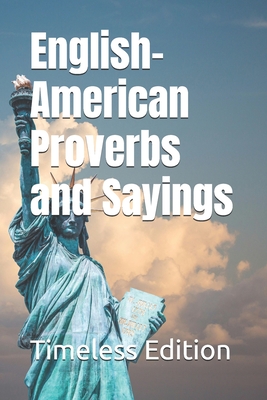
English-American Proverbs and Sayings
| AUTHOR | Edition, Timeless |
| PUBLISHER | Independently Published (01/22/2025) |
| PRODUCT TYPE | Paperback (Paperback) |
Description
Proverbs are often figurative formulas, expressing a truth of experience or advice of practical wisdom. With this book, you will discover these truths and advice of English-American wisdom which will undoubtedly allow you to discover a glimpse of English-American culture. The official language of both England and the United States of America is English. The origin of the English language is a rich and layered history that traces back over 1,500 years. Here's a breakdown:
Origin of English (England) 1. Old English (c. 450-1150 AD)
2. Middle English (c. 1150-1500)
3. Early Modern English (c. 1500-1700)
4. Modern English (1700-present)
Origin of English (England) 1. Old English (c. 450-1150 AD)
- Originated after the Anglo-Saxon invasions of Britain.
- Tribes like the Angles, Saxons, and Jutes came from what is now Germany, Denmark, and the Netherlands.
- They brought Germanic languages, which evolved into Old English.
- Old English had influences from Norse (Viking invasions) and Latin (due to Christian missionaries).
2. Middle English (c. 1150-1500)
- After the Norman Conquest in 1066, French-speaking Normans ruled England.
- This added a significant amount of Norman French vocabulary.
- The grammar of English simplified, and it evolved into Middle English (think of Chaucer).
3. Early Modern English (c. 1500-1700)
- Marked by the Renaissance, printing press (1476), and standardization.
- The vocabulary expanded due to Latin and Greek influences.
- This is the language of Shakespeare and the King James Bible.
4. Modern English (1700-present)
- The form we use today.
- Continues to evolve through globalization, colonization, technology, and media.
- English arrived in North America with British colonists in the early 1600s (e.g., Jamestown, 1607).
- Though the U.S. has no official federal language, English is the de facto national language.
- It became dominant due to:
- British colonial rule.
- Its use in government, education, and law.
- Cultural and economic dominance.
- English originated in early medieval England, rooted in Germanic languages.
- It was shaped by Latin, Norse, and Norman French.
- It became the main language of the U.S. through British colonization.
- Today, English is a global lingua franca, used in diplomacy, business, and the internet.
Show More
Product Format
Product Details
ISBN-13:
9798307945056
Binding:
Paperback or Softback (Trade Paperback (Us))
Content Language:
English
More Product Details
Page Count:
76
Carton Quantity:
108
Product Dimensions:
6.00 x 0.16 x 9.00 inches
Weight:
0.25 pound(s)
Country of Origin:
US
Subject Information
BISAC Categories
Reference | Quotations
Descriptions, Reviews, Etc.
publisher marketing
Proverbs are often figurative formulas, expressing a truth of experience or advice of practical wisdom. With this book, you will discover these truths and advice of English-American wisdom which will undoubtedly allow you to discover a glimpse of English-American culture. The official language of both England and the United States of America is English. The origin of the English language is a rich and layered history that traces back over 1,500 years. Here's a breakdown:
Origin of English (England) 1. Old English (c. 450-1150 AD)
2. Middle English (c. 1150-1500)
3. Early Modern English (c. 1500-1700)
4. Modern English (1700-present)
Origin of English (England) 1. Old English (c. 450-1150 AD)
- Originated after the Anglo-Saxon invasions of Britain.
- Tribes like the Angles, Saxons, and Jutes came from what is now Germany, Denmark, and the Netherlands.
- They brought Germanic languages, which evolved into Old English.
- Old English had influences from Norse (Viking invasions) and Latin (due to Christian missionaries).
2. Middle English (c. 1150-1500)
- After the Norman Conquest in 1066, French-speaking Normans ruled England.
- This added a significant amount of Norman French vocabulary.
- The grammar of English simplified, and it evolved into Middle English (think of Chaucer).
3. Early Modern English (c. 1500-1700)
- Marked by the Renaissance, printing press (1476), and standardization.
- The vocabulary expanded due to Latin and Greek influences.
- This is the language of Shakespeare and the King James Bible.
4. Modern English (1700-present)
- The form we use today.
- Continues to evolve through globalization, colonization, technology, and media.
- English arrived in North America with British colonists in the early 1600s (e.g., Jamestown, 1607).
- Though the U.S. has no official federal language, English is the de facto national language.
- It became dominant due to:
- British colonial rule.
- Its use in government, education, and law.
- Cultural and economic dominance.
- English originated in early medieval England, rooted in Germanic languages.
- It was shaped by Latin, Norse, and Norman French.
- It became the main language of the U.S. through British colonization.
- Today, English is a global lingua franca, used in diplomacy, business, and the internet.
Show More