
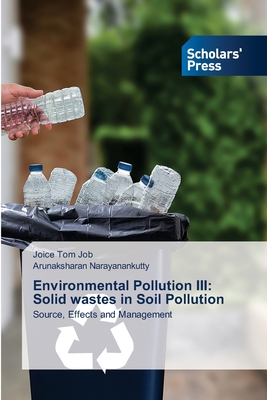
Environmental Pollution III: Solid wastes in Soil Pollution
| AUTHOR | Job, Joice Tom; Narayanankutty, Arunaksharan |
| PUBLISHER | Scholars' Press (03/13/2023) |
| PRODUCT TYPE | Paperback (Paperback) |
Description
Solid waste pollution is a growing problem worldwide as population growth, urbanization, and industrialization continue to increase. Solid waste, which includes everything from household garbage to industrial waste, can have severe environmental and health impacts if not managed properly. The improper disposal of solid waste can lead to soil pollution, air pollution, water pollution, and other environmental problems. Solid waste pollution can lead to several health problems, including respiratory diseases, skin irritation, and infections. The pollution can also affect the quality of the soil, making it unsuitable for agriculture and other land use activities. The impact on biodiversity and wildlife can be severe, as the pollution can lead to a decline in the populations of plants and animals. Solid waste pollution also contributes to climate change, as the waste releases greenhouse gases, such as methane, into the atmosphere. To address solid waste pollution, it is essential to implement proper waste management practices, including waste reduction, reuse, and recycling. Governments and organizations need to invest in waste management infrastructure and technologies.
Show More
Product Format
Product Details
ISBN-13:
9786205521687
ISBN-10:
6205521687
Binding:
Paperback or Softback (Trade Paperback (Us))
Content Language:
English
More Product Details
Page Count:
72
Carton Quantity:
98
Product Dimensions:
6.00 x 0.17 x 9.00 inches
Weight:
0.26 pound(s)
Country of Origin:
US
Subject Information
BISAC Categories
Science | Life Sciences - Ecology
Descriptions, Reviews, Etc.
publisher marketing
Solid waste pollution is a growing problem worldwide as population growth, urbanization, and industrialization continue to increase. Solid waste, which includes everything from household garbage to industrial waste, can have severe environmental and health impacts if not managed properly. The improper disposal of solid waste can lead to soil pollution, air pollution, water pollution, and other environmental problems. Solid waste pollution can lead to several health problems, including respiratory diseases, skin irritation, and infections. The pollution can also affect the quality of the soil, making it unsuitable for agriculture and other land use activities. The impact on biodiversity and wildlife can be severe, as the pollution can lead to a decline in the populations of plants and animals. Solid waste pollution also contributes to climate change, as the waste releases greenhouse gases, such as methane, into the atmosphere. To address solid waste pollution, it is essential to implement proper waste management practices, including waste reduction, reuse, and recycling. Governments and organizations need to invest in waste management infrastructure and technologies.
Show More
Your Price
$44.69